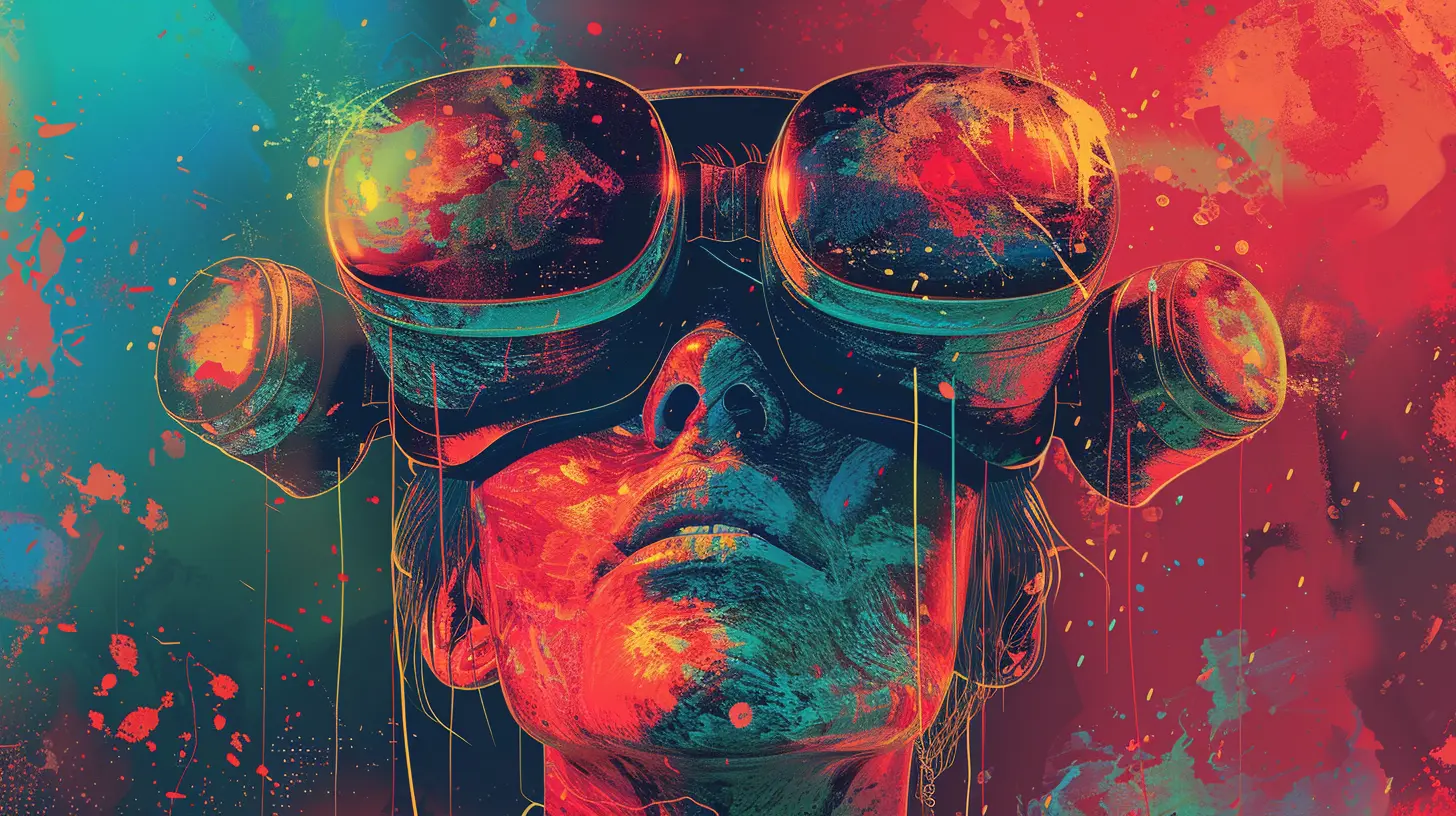
In the quiet, moonlit expanse of an old-growth forest, an owl perches motionless on a gnarled branch, its golden eyes scanning the darkness with eerie precision. For centuries, these enigmatic creatures have captivated human imagination, their nocturnal habits shrouded in mystery. But what if we could step into their world—not as distant observers, but as silent participants in their silent realm? Virtual reality (VR) is rewriting the rules of behavioral science, offering researchers an unprecedented portal into the minds of animals. No longer confined to the limitations of human perception, scientists are now slipping into the feathers of owls, not physically, but psychologically, through immersive digital landscapes that mimic the owls’ natural habitats. This technological leap doesn’t just promise to reveal secrets of owl cognition—it heralds a paradigm shift in how we understand all animal behavior, one that could redefine our relationship with the natural world.
The Silent Wings of Discovery: VR as a Behavioral Observatory
Imagine donning a VR headset and finding yourself suspended in the canopy of a dense woodland, the air thick with the scent of pine and damp earth. Around you, the forest hums with life—rustling leaves, distant calls of prey, the whisper of wind through branches. But this isn’t a simulation for human entertainment; it’s a meticulously crafted replica of an owl’s hunting ground, designed to study how these birds navigate their environment. Researchers are leveraging VR not just as a tool, but as a behavioral observatory, where every twitch of a virtual wing, every tilt of a digital head, is a data point waiting to be decoded.
The brilliance of VR lies in its ability to isolate variables that are nearly impossible to control in the wild. In a real forest, an owl’s behavior is influenced by countless unpredictable factors—unseen predators, shifting weather, the presence of competitors. But in a virtual environment, scientists can manipulate these elements with surgical precision. They can alter the density of foliage, introduce simulated prey at precise intervals, or even simulate the disorienting effects of moonlight filtering through the trees. This level of control allows researchers to ask questions that were once relegated to the realm of speculation: How does an owl prioritize sound over sight when hunting? Does territorial behavior change when the owl perceives its environment as more or less dense? The answers could reshape our understanding of predator-prey dynamics across entire ecosystems.
From Pixels to Predation: Decoding the Owl’s Neural Map
Owls are the ultimate stealth hunters, their brains finely tuned to process auditory and visual cues with astonishing speed. But how does their brain construct a three-dimensional map of their surroundings from the cacophony of the night? VR is providing a window into this cognitive alchemy. By tracking an owl’s gaze and movements within a virtual environment, researchers can map the neural pathways that govern its hunting strategies. This isn’t just about observing behavior—it’s about reverse-engineering perception.
Consider the barn owl, a species renowned for its ability to pinpoint prey in complete darkness. In VR simulations, scientists have discovered that these owls rely on a phenomenon called auditory parallax—a technique where they triangulate the location of a sound by tilting their heads to detect minute differences in timing and volume between their ears. This process, once thought to be purely instinctual, is now being revealed as a dynamic, adaptive strategy. VR allows researchers to tweak the virtual soundscape, introducing delays or distortions to see how the owl’s brain compensates. The findings are staggering: owls don’t just hear—they compute their environment in real time, recalibrating their hunting tactics with each passing second. This level of insight could inspire breakthroughs in robotics, particularly in the development of autonomous drones that navigate using sound.
The Illusion of Flight: VR’s Role in Studying Spatial Cognition
Flight is the defining trait of owls, a skill that demands extraordinary spatial awareness. Yet studying how owls navigate three-dimensional space in the wild is fraught with challenges. VR offers a solution by placing owls in a controlled, three-dimensional environment where their movements can be tracked with millimeter precision. Researchers have developed specialized VR setups where owls are placed on a perch within a dome-like structure, surrounded by high-resolution screens that project a 360-degree view of their habitat. As the owl turns its head or shifts its weight, the virtual environment responds in real time, creating the illusion of flight without the physical constraints of the real world.
What emerges from these experiments is a portrait of an animal that doesn’t just see the world—it interacts with it dynamically. Owls, it turns out, don’t merely react to their surroundings; they anticipate them. In VR simulations, researchers have observed owls adjusting their flight paths before a turn, as if mentally rehearsing the maneuver. This suggests that owls possess a form of spatial memory that rivals some mammals, a discovery that could have profound implications for our understanding of animal intelligence. If owls can plan their movements with such precision, what other cognitive feats might they be capable of?
The Ethical Frontier: VR and the Future of Animal Research
While VR presents unparalleled opportunities for studying animal behavior, it also raises ethical questions. Can a virtual environment ever truly replicate the sensory richness of the natural world? And more importantly, does subjecting animals to simulated environments risk altering their natural behaviors? These are not trivial concerns. Researchers are acutely aware of the potential pitfalls and are taking steps to mitigate them. For instance, VR experiments are designed to be as brief as possible, with breaks that allow animals to return to their normal routines. Additionally, the data collected is cross-referenced with observations from the wild to ensure that the virtual environment doesn’t distort the owl’s true nature.
Yet the ethical debate extends beyond the welfare of individual animals. As VR becomes more sophisticated, it could lead to a future where animals are studied entirely in digital realms, reducing the need for invasive procedures or habitat disturbances. This shift could democratize behavioral research, making it possible to study species that are endangered or difficult to observe in the wild. Imagine a world where scientists can “fly” alongside a snowy owl in the Arctic tundra or track the movements of a spotted owl in the Pacific Northwest—all from the comfort of a laboratory. The possibilities are as thrilling as they are controversial, forcing us to confront the boundaries of human curiosity and animal rights.
Beyond the Owl: A New Era for Behavioral Science
The implications of VR in animal behavior research extend far beyond owls. This technology is poised to revolutionize our understanding of a vast array of species, from the echolocation skills of dolphins to the problem-solving abilities of crows. By creating immersive, interactive environments, scientists can now ask questions that were once unimaginable: How do bats navigate a cave system? What strategies do octopuses use to solve puzzles in their dens? Can VR help us decode the communication systems of whales? The answers could unlock secrets that have eluded researchers for generations.
Moreover, VR is bridging the gap between human and animal cognition. As we step into the sensory worlds of other species, we gain not just data, but empathy. Understanding how an owl perceives the world forces us to confront the limitations of our own senses. It challenges us to think beyond anthropocentrism and recognize that intelligence is not a single, linear spectrum but a vast, interconnected web of adaptations. In this light, VR isn’t just a tool—it’s a cognitive mirror, reflecting back to us the diversity of life on Earth and our place within it.
The Final Flight: What VR Reveals About Our Own Perceptions
As the sun rises over the virtual forest, the owl’s digital wings fold, and the simulation ends. The headset is removed, and the researcher is once again grounded in the familiar hum of the lab. But the experience lingers, a reminder that our understanding of the natural world is only as rich as the tools we use to explore it. VR has given us a glimpse into the silent, feathered minds of owls, but it has also revealed something deeper: the fragility of our own perceptions. What we assume to be the limits of animal intelligence may simply be the limits of our imagination.
In the coming years, as VR technology becomes more accessible and sophisticated, the boundaries between human and animal will blur even further. We may never truly know what it’s like to be an owl, but through the lens of virtual reality, we can at least begin to ask the right questions. And perhaps, in that asking, we’ll find a newfound respect for the silent hunters of the night—and the countless other creatures that share our planet.