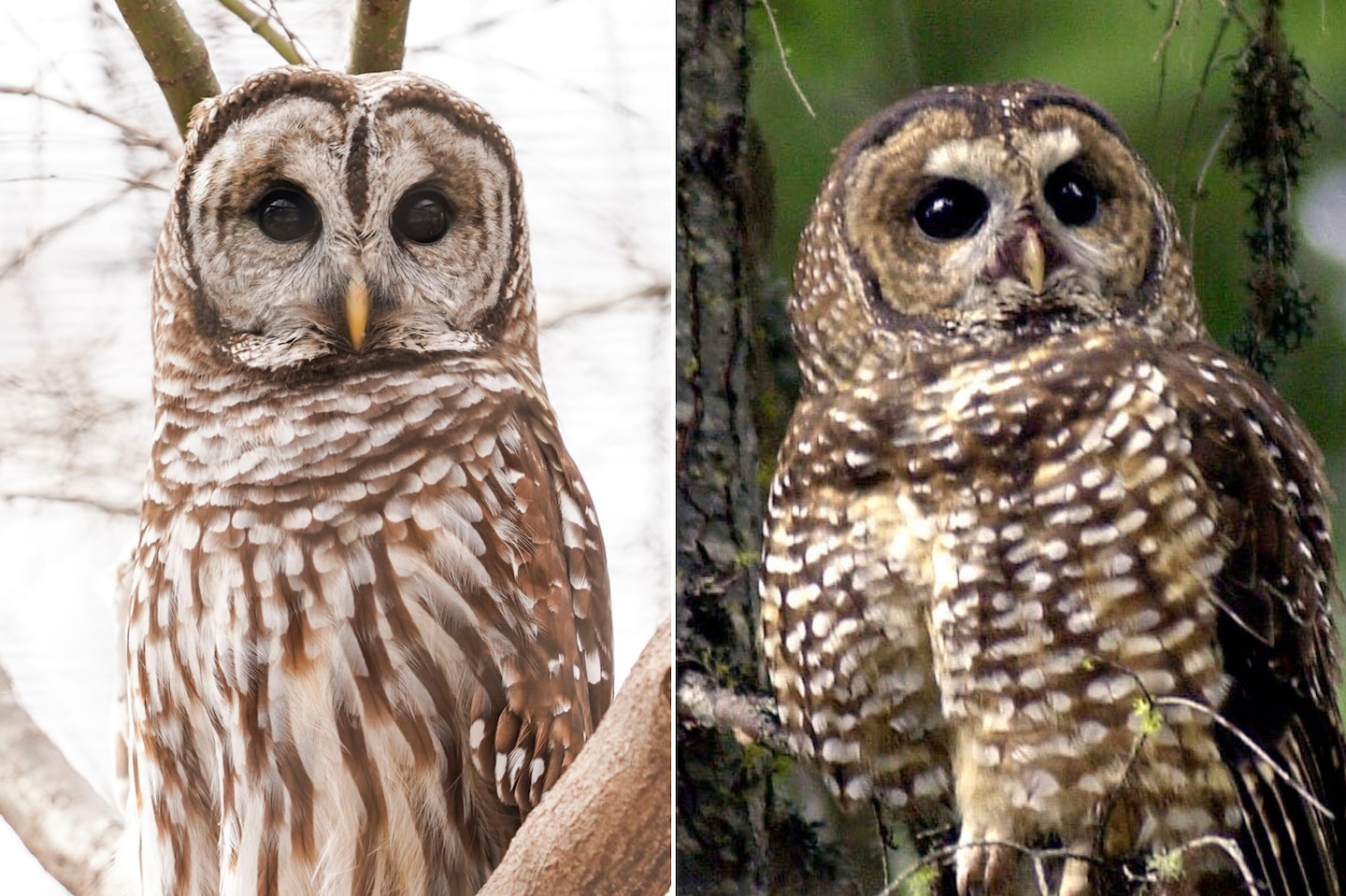
The delicate balance between barred owls and their spotted owl counterparts has stirred conservationists and wildlife officials alike. As these species contend for survival amidst environmental pressures, cutting-edge scientific innovation offers a shimmering beacon of hope. Among these innovations, nanotechnology stands out as a revolutionary tool with the potential to elucidate complex ecological dynamics, enhance monitoring capabilities, and ultimately guide more efficacious conservation strategies. The union of nanoscience and avian research promises to transform how we understand and protect these enigmatic creatures.
The Role of Nanotechnology in Avian Population Monitoring
Monitoring barred and spotted owl populations has historically been a formidable challenge due to their elusive nature and dense forest habitats. Nanotechnology introduces a paradigm shift through the deployment of nanosensors and nanodevices that can discreetly gather real-time data. These miniature sensors, often smaller than a grain of rice, can be affixed to owls or embedded within their habitats to track movement patterns, vocalizations, and physiological changes with unrivaled precision.
Such devices enable researchers to transcend traditional observational limitations by providing continuous, non-invasive surveillance over expansive terrains. This granular data collection elucidates crucial behavioral patterns—territorial ranges, nesting habits, and interspecies interactions. The accumulation of this information grants unparalleled insight into how barred and spotted owls coexist, compete, or adapt in shared environments, thereby informing targeted intervention strategies.
Enhancing Genetic Research and Species Differentiation
Genetic analysis sits at the heart of distinguishing barred owls from spotted owls, particularly in areas where hybridization obscures species boundaries. Innovations in nanotechnology facilitate the refinement of DNA sampling and analysis at the nanoscale, dramatically increasing sensitivity and accuracy. Nanopore sequencing devices, for instance, can analyze minuscule genetic fragments in the field, reducing turnaround times and enabling immediate assessment.
These advancements permit conservationists to identify genetic markers specific to each species, detect hybrids, and monitor genetic diversity within populations. Such revelations are essential for maintaining the genetic integrity of spotted owls, which are more vulnerable to displacement. Nanotech-driven genetic tools thus empower researchers to implement precision-guided conservation efforts, minimizing unintended crossbreeding and preserving species purity.
Nanomaterials for Habitat Restoration and Protection
Habitat degradation fuels the decline in spotted owl populations, while invasive barred owls adapt with relative ease. Nanomaterials, with their extraordinary physicochemical properties, offer novel solutions for habitat restoration. For example, nano-engineered composites can be employed to stabilize soil substrates, control invasive plant species, and purify water within ecological niches essential to owl survival.
Furthermore, nanoparticle-based anti-predatory repellents or attractants could be developed to selectively influence barred owl movements without harming the ecosystem. Such targeted ecological modulation would subtly manipulate habitat occupancy, affording spotted owls a vital respite. The integration of nanomaterials into conservation practices represents a frontier where technology and ecosystem stewardship intertwine harmoniously.
Advancing Biotelemetry through Nanodevices
Biotelemetry, the remote measurement and transmission of biological data, gains transformative potential through nanotechnology. Nanodevices enable the continuous monitoring of vital signs such as heart rate, body temperature, and stress hormones in barred and spotted owls. Lightweight, biocompatible nanosensors can be embedded within micro-tags that minimally impact the owls’ natural behaviors.
This physiological data illuminates the effects of environmental stressors, interspecies competition, and human-induced disturbances on owl health. By contextualizing these stress indicators alongside behavioral data, researchers can decipher causative factors behind population declines, adjust conservation interventions accordingly, and predict future threats with greater accuracy.
Data Integration and Predictive Modeling Empowered by Nanotech
The troves of data collected via nanotechnology-enhanced methods demand sophisticated analytics to translate into actionable knowledge. Integrating ecological, genetic, physiological, and environmental datasets fosters a holistic understanding of the barred-spotted owl dynamic. Advances in nano-enabled computing and data processing can streamline these massive, multifaceted datasets.
Machine learning algorithms, fueled by this rich data environment, emerge as vital tools for predictive modeling. These models forecast population trajectories under various conservation scenarios, evaluate the potential efficacy of control measures, and prioritize resource allocation. Nanotechnology thus underpins not only data acquisition but also the intelligent synthesis of information vital for adaptive management practices.
Ethical and Environmental Considerations in Nanotechnology Application
While the promise of nanotechnology is expansive, its deployment in wildlife conservation must be pursued with circumspection. The introduction of nanomaterials and devices into sensitive ecosystems warrants thorough risk assessments to preclude unintended ecological consequences. Potential bioaccumulation, toxicity, or behavioral disruptions must be meticulously evaluated to uphold environmental integrity.
Ethical considerations also arise regarding the welfare of individual animals subjected to nanotech tracking or sampling. Ensuring minimal invasiveness and stress is paramount. Collaborative frameworks involving ecologists, ethicists, and nanotechnologists must guide responsible research methodologies. Balancing technological innovation with conservation sensitivity ensures nanotechnology serves as a benevolent force, safeguarding both owls and their habitats.
Future Horizons: Integrating Nanotechnology with Conservation Policy
The transformative capabilities of nanotechnology beckon a future where conservation policies are intimately informed by precise scientific data. As nanotech-assisted research unveils ever more nuanced ecological realities, policymakers can craft dynamic, evidence-based strategies tailored to the multifaceted challenges facing barred and spotted owls.
Investment in interdisciplinary collaboration, training, and infrastructure will be pivotal to realize this vision. Public engagement and education about nanotechnology’s role in conservation will foster broader support and understanding. Ultimately, embracing nanotechnology as an integral component of wildlife stewardship holds the promise of elevating both scientific inquiry and conservation impact to unprecedented heights.
Nanotechnology offers a revolutionary lens through which to study and protect barred and spotted owls. By enhancing monitoring, genetic research, habitat management, biotelemetry, and data analysis, it equips conservationists with tools once relegated to the realm of science fiction. Embracing these advancements with ethical prudence and ecological mindfulness can unlock new chapters in the enduring story of coexistence and survival within our shared natural world.