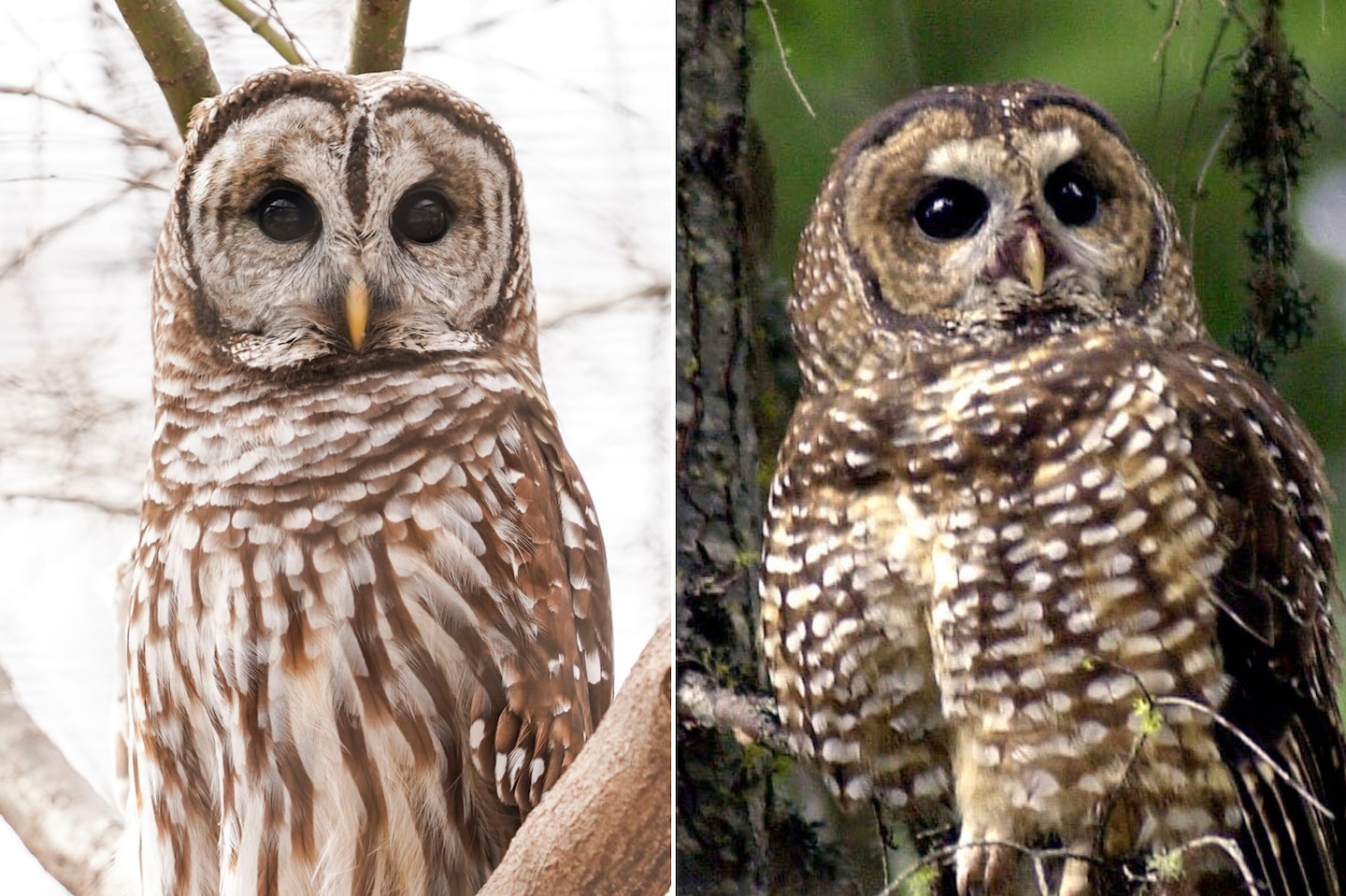
In the shadowy cathedrals of ancient forests, two owls reign as enigmatic monarchs—each weaving its own tale of survival, dominance, and mystery. The Spotted Owl and the Barred Owl, though sharing the nocturnal stage with overlapping territories and similar appearances, dance to distinctly different rhythms in their behavior. This avian duel is not merely a contest of wings and talons; it is a profound clash of ecological identities, survival strategies, and evolutionary nuances. Understanding their behavioral divergences reveals a captivating narrative of coexistence, conflict, and the delicate balances within nature’s unseen theaters.
Theirs Is a Tale of Two Territories: Spatial Domination and Habitat Preferences
Imagine the forest as a sprawling metropolis, each owl carving out its own kingdom within the urban sprawl. The Spotted Owl, often described as a reclusive noble, claims its territory predominantly in the dense, old-growth coniferous forests of the Pacific Northwest. These ancient woodlands, cloaked in mist and towering giants, provide not only shelter but a sanctuary steeped in evolutionary heritage. The Spotted Owl’s fidelity to these venerable habitats underscores its vulnerability; it is both a sentinel and a symbol of these venerable woods.
In comparison, the Barred Owl is more akin to the opportunistic urbanite, adaptable and tenacious. It embraces a wider range of habitats—ranging from mixed deciduous forests, riparian corridors, and even fragmented woodlands touching suburban edges. This versatility allows the Barred Owl to thrive where the Spotted Owl cannot, effectively expanding its reign into areas once untouched. Its broader habitat acceptance is a behavioral hallmark, enabling it to rapidly colonize and outcompete the more specialized Spotted Owl.
The Symphony of Song: Vocalizations as a Reflection of Behavioral Ecology
Communication in owls is their invisible signature, a spectral thread weaving through the nocturnal silence. The Spotted Owl’s call, a haunting and multisyllabic hoot, resonates like a melancholic ballad echoing through cathedral-like forest corridors. These calls are deliberate and spaced, instrumental in maintaining pair bonds and delineating territories within the dense canopy layers.
The Barred Owl, by contrast, boasts a more robust and varied vocal repertoire—most famously its “Who cooks for you? Who cooks for you-all?” chorus which pierces the night with both curiosity and command. This vocal exuberance reflects a behavioral boldness, signaling dominance and territorial claims with a confident theatricality. The Barred Owl is not merely vocal but vociferous, using sound as a tool to assert presence swiftly and with fervor.
Hunting Strategies: Precision versus Opportunism
The art of the hunt reveals profound divergences in behavioral inclinations. The Spotted Owl employs a patient, almost meditative approach—perching silently for prolonged intervals and relying on acute hearing to detect minute rustlings amid the forest floor. Its diet primarily comprises small mammals, such as flying squirrels and wood rats, prey that demand stealth and precision. This methodical hunting technique mirrors the Spotted Owl’s need for stable, undisturbed habitats rich in specific prey.
Contrastingly, the Barred Owl is a versatile predator, tactile and relentless. It exhibits a more aggressive hunting behavior, often gleaning prey not limited to small mammals but also amphibians, birds, and invertebrates. Its adaptability is evident in the willingness to hunt in open spaces or along forest edges, using a combination of stealth and active pursuit. This bold opportunism aligns with its broader ecological niche and demographic success within varied environments.
Reproductive Rhythms: Life-Cycle Strategies of Endurance and Expansion
Reproductive behavior further elucidates the contrasting strategies between these owls. The Spotted Owl, a custodian of slow and steady continuity, typically raises one to two offspring per year. Its reproductive success hinges on stable territories and an abundance of undisturbed old-growth habitat. This slow reproductive rate coincides with the species’ conservation challenges, highlighting a vulnerability born from its specialized ecological role.
Meanwhile, the Barred Owl embraces a more fecund approach, often successful in raising two to three fledglings annually, occasionally more in optimal conditions. This reproductive profusion is a testament to the species’ ecological plasticity—capable of quickly exploiting resources and expanding its population. The Barred Owl’s reproductive vigor grants it a demographic advantage that often comes at the expense of its more specialized cousin.
Behavioral Interactions: The Intricacies of Interspecies Rivalry
Where their realms intersect, the behavioral clash crystallizes in direct competitive interactions. The Barred Owl’s assertiveness frequently manifests in territorial displacement and even interspecific aggression. It exhibits boldness in encroaching upon Spotted Owl nesting sites, sometimes leading to exclusion or abandonment by the latter. This behavioral dominance is like the relentless tide eroding fragile cliffs—a slow but inexorable force reshaping the ecological landscape.
The Spotted Owl’s response is less confrontational, often resulting in retreat or avoidance. This reclusive disposition, once an asset minimizing intra-species conflict, sadly renders it less capable of withstanding Barred Owl expansion. The behavioral dynamic between these species paints a poignant tableau of endurance versus expansion, subtlety versus assertiveness.
Unique Appeal: The Ecological and Symbolic Significance Woven in Behavior
Beyond the tangible behaviors lies a deeper, almost mythical allure. The Spotted Owl embodies the spirit of the ancient forest—reserved, enigmatic, a living relic of ecological continuity. Its subtlety and specialization invite awe, drawing attention to the fragility of old-growth ecosystems. It is an archetype of cautious endurance, a whisper from the wilderness urging reverence and protection.
The Barred Owl, meanwhile, commands attention through its adaptability and fervent presence. Its behavior champions resilience and adaptability, thriving through change and disruption. While seen by some as the antagonist in this avian saga, the Barred Owl is no villain; it is a testament to life’s relentless drive to occupy every ecological niche available, a shape-shifting force within evolving forests.
Together, their behaviors tell an epic tale of nature’s unfolding drama—a narrative of coexistence, competition, and the profound behavioral intricacies that define their existence. To witness their interplay is to glimpse the eternal dance between tradition and change, fragility and fortitude, silence and sound beneath the emerald canopy.