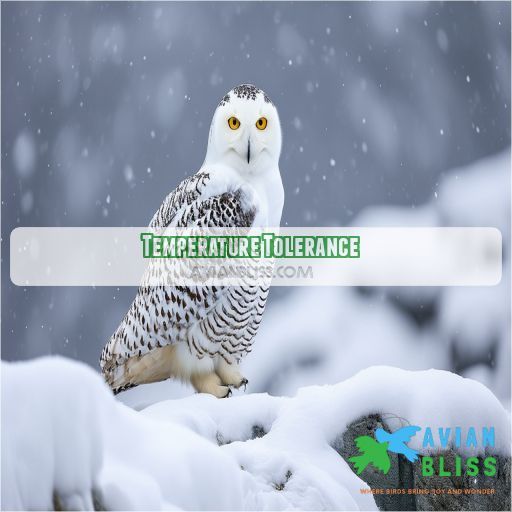
The Arctic tundra, a vast and seemingly desolate expanse, thrums with an understated vitality—one that is increasingly under siege. The snowy owl, a creature of stark contrasts and silent resilience, has long been a symbol of this fragile ecosystem. Yet, as the planet warms, its habitat is unraveling at an alarming pace. The question is no longer whether we can predict this loss, but how we can wield climate data as a tool for intervention. By dissecting temperature shifts, ice melt patterns, and prey availability, we can not only forecast the owl’s shrinking domain but also devise strategies to safeguard it. This is not merely an ecological endeavor; it is a reckoning with our own role in reshaping the natural world.
The Fragility of the Tundra: Why Climate Data Matters
The tundra is a paradox—a biome of extremes where life persists against the odds. Its permafrost, a frozen fortress of ancient carbon, locks away greenhouse gases, while its brief summers burst with life in a frenzy of reproduction. For the snowy owl, this rhythm is everything. Climate data reveals that the Arctic is warming at least twice as fast as the global average, a phenomenon known as Arctic amplification. This disproportionate heating disrupts the delicate balance of the tundra, melting permafrost, altering snowmelt timing, and shifting the distribution of lemmings—the owl’s primary prey. Without precise data on these changes, conservation efforts risk being reactive rather than proactive. Temperature anomalies, for instance, can predict the onset of breeding seasons, allowing researchers to anticipate owl movements before they occur. The data is not just numbers; it is a lifeline.
Mapping the Invisible: Remote Sensing and Habitat Tracking
Traditional field surveys are invaluable, but they are limited by scale and accessibility. Enter remote sensing—a revolution in how we perceive the Arctic. Satellites and drones now capture high-resolution imagery of snow cover, vegetation shifts, and even owl nesting sites from thousands of miles away. These tools expose the invisible threads connecting climate variables to habitat loss. For example, when sea ice retreats earlier in the season, it alters wind patterns, which in turn affect snow depth—a critical factor for owl nesting success. By correlating satellite data with ground observations, scientists can identify microclimates where owls might still thrive. This is not just mapping; it is a form of ecological detective work, piecing together a puzzle where each fragment holds the potential to save a species.
Prey Dynamics: The Hidden Engine of Survival
The snowy owl’s fate is inextricably linked to the lemming—a small rodent whose population cycles are as erratic as the Arctic’s climate. Climate data has shown that warmer winters, with their unpredictable freeze-thaw cycles, can decimate lemming populations before they reproduce. When prey becomes scarce, owls are forced to disperse, often into unfamiliar territories where survival rates plummet. By analyzing long-term prey data alongside temperature records, researchers can predict lemming crashes years in advance. This foresight allows conservationists to implement measures such as supplemental feeding or habitat restoration in critical areas. The lemming’s decline is not just a biological footnote; it is a warning sign, a canary in the coal mine for the entire ecosystem.
Human Footprints: The Overlooked Variables in Habitat Loss
While climate change is the most visible threat, it is not the only one. Industrial activities, from oil drilling to shipping routes, carve through the Arctic landscape, fragmenting habitats and introducing pollutants. Climate data can expose these human-induced pressures by tracking changes in snow chemistry, noise pollution levels, and even the presence of invasive species. For instance, increased ship traffic in the Arctic not only accelerates ice melt but also disrupts owl hunting patterns. By integrating human activity data into climate models, conservationists can advocate for stricter regulations in key areas. The Arctic is not a pristine wilderness; it is a battleground where natural and anthropogenic forces collide. Understanding this intersection is crucial for any mitigation strategy.
Adaptive Strategies: From Data to Action
Knowledge without action is futile. The real power of climate data lies in its ability to inform adaptive management strategies. For example, if data predicts a decline in lemming populations, conservationists can establish protected corridors for owls to migrate to more stable regions. Artificial nesting sites, designed to mimic natural tundra conditions, can be deployed in areas where traditional nesting grounds are failing. Even community-led initiatives, such as citizen science programs that monitor owl populations, can bridge gaps in data collection. The key is flexibility—climate models are not infallible, and conservation strategies must evolve with them. This is not about imposing solutions; it is about collaborating with the ecosystem to find a sustainable path forward.
The Ethical Imperative: Why This Matters Beyond the Owl
The snowy owl is more than a charismatic species; it is an indicator of the Arctic’s health and, by extension, the planet’s. Its decline is a symptom of a larger crisis—one that threatens not just biodiversity but human communities as well. Indigenous peoples, who have coexisted with these owls for millennia, rely on the tundra for their livelihoods. Climate-induced habitat loss disrupts their way of life, eroding cultural heritage and food security. By using climate data to protect the snowy owl, we are not just saving a bird; we are preserving a way of life. This is an ethical obligation, a recognition that our actions have consequences far beyond our immediate surroundings. The Arctic is not a remote outpost; it is a mirror reflecting the state of our planet.
Conclusion: A Call to Vigilance and Action
The snowy owl’s story is one of resilience and adaptation, but it is also a cautionary tale. Climate data is our most powerful tool in the fight against habitat loss, but it is only as effective as the actions it inspires. We must move beyond observation and into intervention, using data to guide policy, conservation, and public awareness. The Arctic is not a lost cause; it is a frontier of possibility. By harnessing the insights hidden within climate data, we can rewrite the narrative of the snowy owl’s future—one where it soars not in desperation, but in harmony with a changing world.