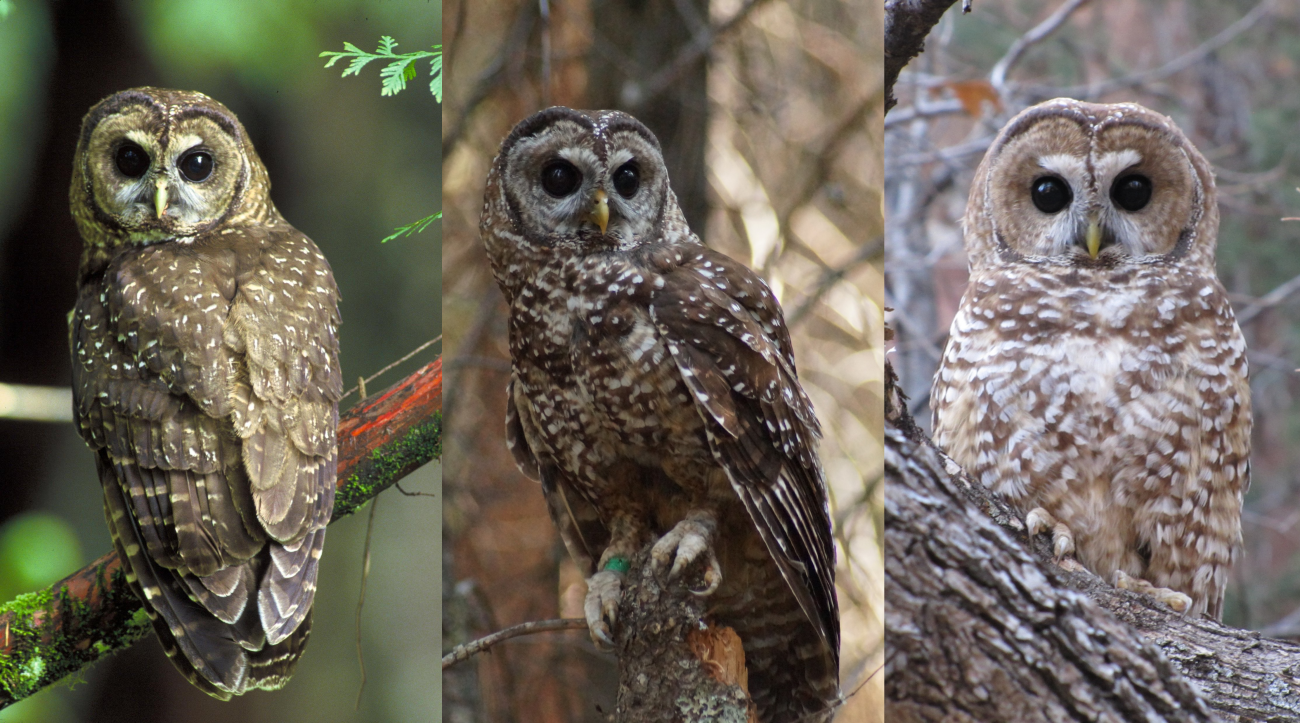
The California spotted owl (Strix occidentalis occidentalis) is not merely a bird—it is a living emblem of the ancient forests it calls home, a silent sentinel whose haunting calls echo through the cathedral-like groves of towering conifers. This subspecies, draped in a cloak of mottled brown and white, is more than a creature of the wild; it is a living paradox—a paradox of fragility and resilience, of shadow and light, of a world both vanishing and fiercely persistent. To understand the California spotted owl is to peer into the heart of a vanishing wilderness, where each feather, each hoot, tells a story of survival against the relentless tide of human progress.
The Ghost in the Canopy: A Portrait of Elegance and Mystery
Imagine a creature so perfectly adapted to its environment that it seems to dissolve into the dappled light filtering through the forest canopy. The California spotted owl is a master of disguise, its plumage a mosaic of earthy browns and creams, speckled with delicate white spots that mimic the play of sunlight on bark and lichen. Its large, dark eyes—like polished obsidian—are windows into a world of nocturnal wonder, where silence is a language and stealth a survival tactic.
This owl is not a showy bird. It does not boast the fiery plumage of a cardinal or the regal bearing of an eagle. Instead, it moves through the world with quiet dignity, its presence announced not by flamboyance, but by the soft, rhythmic cadence of its four-note call—a sound that carries the weight of centuries through the ancient woods. To encounter one is to witness a fleeting moment of magic, a glimpse into a realm where time moves differently, where the past and present blur in the dusk.
The Forest’s Keeper: An Ecosystem’s Silent Architect
The California spotted owl is not just a resident of the forest; it is its architect, its guardian, and its unwitting historian. This bird thrives in the mature, dense forests of California’s Sierra Nevada and coastal ranges, where Douglas firs, ponderosa pines, and black oaks stand as silent sentinels of a bygone era. These are not mere trees—they are cathedrals, their towering trunks and sprawling canopies forming a labyrinth of life, where every branch is a highway, every hollow a sanctuary.
As a top predator, the spotted owl plays a crucial role in maintaining the balance of its ecosystem. It preys on small mammals like woodrats and flying squirrels, keeping their populations in check and preventing overgrazing of the forest floor. In doing so, it ensures the health of the understory, allowing new generations of trees to take root and flourish. The owl’s presence is a sign of a thriving, biodiverse forest—a living tapestry where every thread is essential.
Yet, this delicate balance is under siege. The owl’s dependence on old-growth forests makes it a canary in the coal mine for the health of these ecosystems. When the trees fall, so too does the owl’s kingdom. And with it, the intricate web of life that depends on the forest’s survival.
The Shadow of Progress: A Species at the Crossroads
To understand the plight of the California spotted owl is to confront the harsh realities of human expansion. The same forests that have sheltered this bird for millennia are now coveted for their timber, their land, and their potential. Logging, urban sprawl, and climate change have carved deep scars into the landscape, fragmenting the owl’s habitat into isolated pockets of wilderness.
In the late 20th century, the owl’s decline became impossible to ignore. As old-growth forests were cleared at an alarming rate, the spotted owl’s population plummeted, leading to its listing as a threatened species under the Endangered Species Act in 1990. Conservation efforts followed, but the battle has been fraught with controversy. Timber industries argued for sustainable logging, while environmentalists fought to protect the owl’s last strongholds. The owl became a symbol—not just of a species in peril, but of the broader struggle to reconcile human needs with the preservation of nature.
Today, the owl’s future remains precarious. Climate change looms large, bringing with it longer fire seasons, drought, and shifting ecosystems that threaten the very forests the owl depends on. Invasive species, such as the barred owl—a more aggressive cousin from the east—have further complicated the picture, outcompeting the spotted owl for territory and resources. The owl is not just fighting for its survival; it is fighting against the tide of an ever-changing world.
The Call of the Wild: Why the Owl Matters
Why should we care about the California spotted owl? The answer lies not just in its ecological importance, but in what it represents—a connection to a wilder, more untamed world. This owl is a reminder that nature is not a resource to be exploited, but a living, breathing entity deserving of respect and protection. Its survival is a litmus test for our own humanity, a measure of our willingness to coexist with the wild things that share this planet.
There is something deeply poetic about the spotted owl. It is a creature of the twilight, a being that thrives in the liminal spaces between day and night, between past and present. To lose it would be to erase a chapter from the story of the Earth—a story that has been unfolding for millions of years. Its extinction would not just be the loss of a species; it would be the loss of a piece of our collective soul, a fragment of the wild that once stretched unbroken across the continent.
Moreover, the owl’s plight forces us to confront uncomfortable truths about our relationship with the natural world. It challenges us to ask: What do we value more—the convenience of a clear-cut hillside or the haunting beauty of an owl’s call in the night? The answer to this question will define not just the fate of the California spotted owl, but the future of the forests it inhabits—and, ultimately, the future of us all.
Hope in the Shadows: Conservation in the 21st Century
Despite the challenges, there is reason for hope. Conservationists, scientists, and Indigenous communities have joined forces to protect the California spotted owl and its habitat. Efforts to restore old-growth forests, reduce wildfire risks, and control invasive species are underway, offering a glimmer of light in an otherwise bleak landscape. Some of these initiatives are bold and innovative, such as prescribed burns that mimic natural fire regimes or the creation of wildlife corridors that allow the owl to move safely between fragmented habitats.
Indigenous knowledge has also played a crucial role in these efforts. For centuries, Native peoples have lived in harmony with the land, understanding the delicate balance of ecosystems in ways that modern science is only beginning to grasp. Their stewardship practices, such as controlled burns and selective harvesting, offer valuable lessons for conservation in the 21st century. By centering Indigenous voices in these efforts, we not only honor their wisdom but also strengthen the fight to save the spotted owl.
Yet, hope alone is not enough. The California spotted owl’s survival will require a fundamental shift in how we view and interact with the natural world. It will demand that we prioritize long-term ecological health over short-term gains, that we recognize the intrinsic value of wilderness, and that we accept our role as stewards rather than conquerors of the Earth. This is a daunting task, but not an impossible one. The owl’s story is far from over—and neither is ours.
The Last Hoots: A Call to Action
The California spotted owl is more than a bird. It is a symbol of resilience, a guardian of ancient forests, and a poignant reminder of what we stand to lose if we fail to act. Its story is one of quiet strength, of survival against the odds, and of the enduring power of nature to inspire awe and humility. But it is also a story that is still being written—and the ending is not yet set in stone.
To ensure that future generations can hear the owl’s haunting call, we must act with urgency and determination. This means supporting conservation efforts, advocating for policies that protect old-growth forests, and rethinking our relationship with the natural world. It means recognizing that the fate of the California spotted owl is intertwined with our own—that its survival is not just a matter of ecological importance, but of moral and spiritual significance.
In the end, the California spotted owl is a mirror. It reflects back to us the choices we have made, the values we uphold, and the world we wish to leave behind. Will we be the generation that allows this magnificent creature to vanish into the shadows? Or will we be the ones who ensure that its haunting calls continue to echo through the ancient forests, a testament to the wild beauty that still remains?
The answer lies in our hands. The owl is listening.