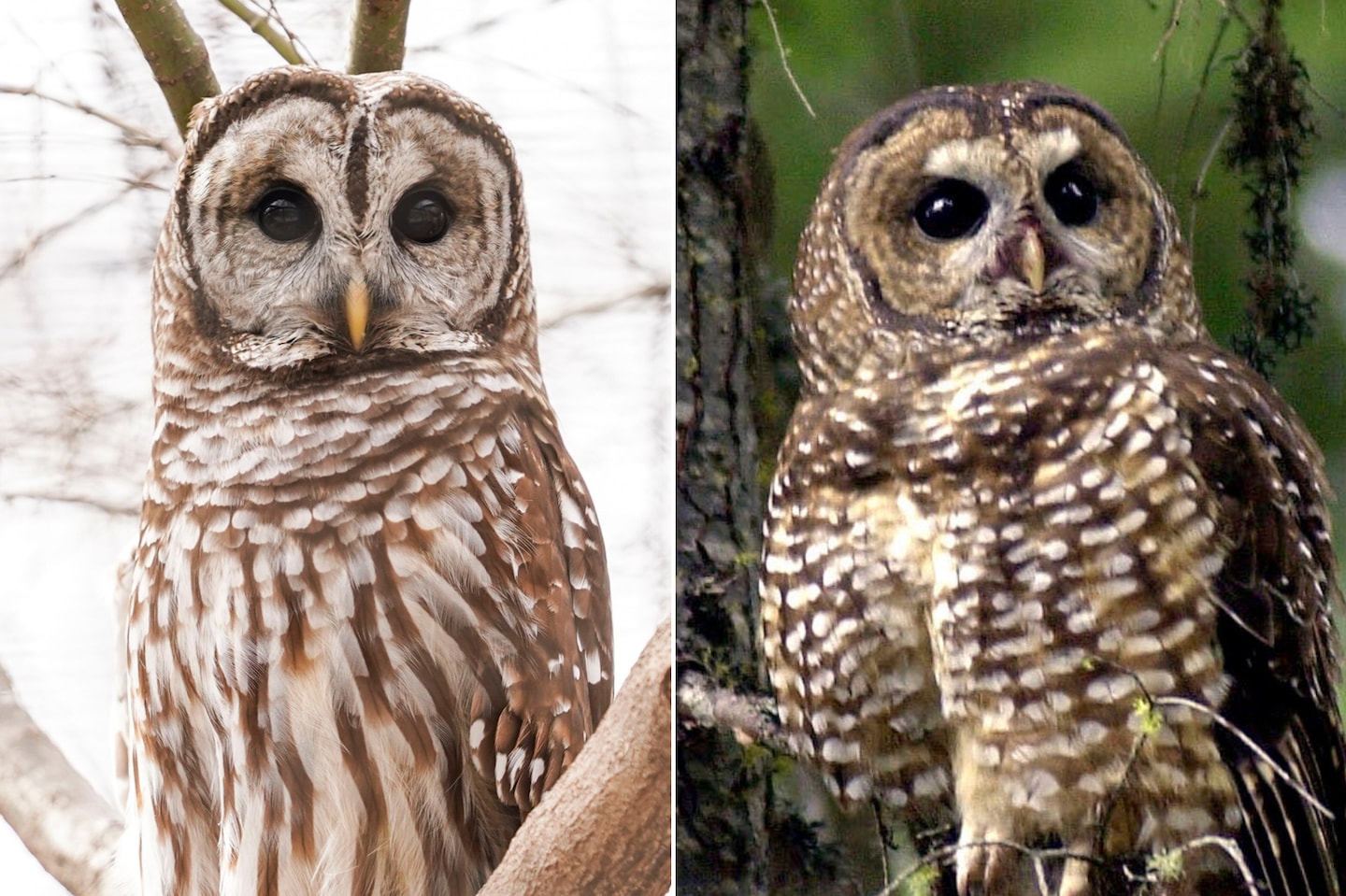
The barred owl, with its haunting, rhythmic “Who cooks for you? Who cooks for you-all?” call, and the spotted owl, cloaked in silent, mottled plumage, are not merely birds—they are living parables of ecological balance, cultural symbolism, and human culpability. Their intertwined fates reveal a deeper narrative: one of habitat fragmentation, invasive species, and the unintended consequences of conservation policies. To craft educational materials about their conservation is not just to inform—it is to illuminate the fragile threads that bind species to their ecosystems and humans to their shared planet. This guide explores how to create compelling, nuanced, and actionable content that resonates with learners of all ages, fostering both understanding and stewardship.
The Allure of the Owl: Why These Birds Captivate Us
Owls have long been shrouded in myth and mystery, their nocturnal habits and piercing gaze evoking everything from wisdom to foreboding. The barred owl’s vocal exuberance contrasts sharply with the spotted owl’s elusive silence, creating a duality that fascinates observers. This dichotomy mirrors our own relationship with nature—some species demand attention through their charisma, while others thrive in the shadows, their value only apparent upon closer inspection. Educational materials must harness this duality, using the barred owl’s boldness as a gateway to discussions about ecological disruption, and the spotted owl’s subtlety as a lens to explore the quiet tragedies of habitat loss. By framing these birds as both characters and casualties in a larger story, educators can tap into the innate human curiosity about the natural world’s hidden dramas.
Rooting the Narrative in Ecological Interdependence
Conservation is not an abstract concept—it is a web of relationships. The barred owl’s expansion into the spotted owl’s territory is not merely a biological curiosity; it is a symptom of broader environmental upheaval. Climate change, deforestation, and urban sprawl have fragmented old-growth forests, forcing species into unnatural competition. Educational materials should dissect these connections, using clear infographics to map the barred owl’s range expansion alongside the spotted owl’s shrinking habitat. A powerful technique is to juxtapose historical forest coverage with current satellite imagery, revealing the stark reality of ecological loss. By emphasizing interdependence, learners can grasp that saving one species often means preserving an entire ecosystem—from the fungi that nourish ancient trees to the insects that sustain the owls’ prey.

Debunking Myths: The Barred Owl’s Role as a Scapegoat
Public discourse often paints the barred owl as an invasive villain, a narrative that obscures deeper truths. While it is true that barred owls outcompete spotted owls in degraded habitats, their presence is a symptom, not the cause, of ecological imbalance. Educational materials must challenge this oversimplification by presenting data on barred owl population dynamics, their natural range shifts, and the role of human activity in altering ecosystems. A case study approach—examining regions where barred owl populations have stabilized without intervention—can illustrate that coexistence is possible. By reframing the barred owl as a messenger of environmental change rather than a malevolent force, educators can foster empathy and critical thinking, encouraging learners to question who truly bears responsibility for conservation failures.
The barred owl’s adaptability is a double-edged sword. Its success in human-altered landscapes underscores nature’s resilience but also highlights the fragility of specialized species like the spotted owl. This paradox invites learners to ponder: Is conservation about preserving the status quo, or about fostering adaptability in a rapidly changing world? The answer lies not in eradication but in holistic habitat restoration—a concept that must be central to any educational narrative.
Designing Engaging, Multisensory Learning Experiences
Static text and images alone cannot convey the urgency of owl conservation. To truly engage audiences, educational materials should incorporate multisensory elements. Audio clips of barred owl calls, juxtaposed with the spotted owl’s eerie silence, can evoke emotional responses. Interactive maps allow learners to trace the barred owl’s migration routes, while 3D models of old-growth forest structures reveal the intricate microhabitats these birds depend on. For younger audiences, tactile activities—such as creating owl masks or simulating forest canopy layers with fabric and wire—can make abstract concepts tangible. The goal is to transform passive learning into an immersive experience, where the learner doesn’t just hear about conservation but feels its weight and wonder.
Addressing Ethical Dilemmas: When Conservation Requires Sacrifice
The proposal to cull barred owls to save spotted owls is a moral quagmire that demands nuanced discussion. Educational materials should present this dilemma not as a binary choice but as a complex ethical puzzle. What are the implications of prioritizing one species over another? How do we balance human intervention with natural processes? Case studies from other conservation efforts—such as the culling of barred owls in the Pacific Northwest or the controversial wolf reintroduction programs—can provide context. Role-playing exercises, where learners assume the perspectives of ecologists, policymakers, and indigenous communities, can foster empathy and critical analysis. The key is to avoid presenting conservation as a straightforward battle between good and evil, but rather as a series of trade-offs that require careful, inclusive deliberation.
Empowering Action: From Awareness to Advocacy
Knowledge without action is a hollow victory. Educational materials must equip learners with tangible ways to contribute to owl conservation. This could include guides to creating wildlife-friendly gardens, citizen science projects like eBird or iNaturalist, or advocacy toolkits for supporting policies that protect old-growth forests. For educators, partnerships with local wildlife rehabilitation centers or indigenous-led conservation groups can provide real-world connections. A particularly impactful approach is to frame conservation as a cultural responsibility, highlighting the role of indigenous communities in stewarding these lands for millennia. By linking personal actions to broader movements, learners can see themselves as active participants in the owls’ survival story.
The Ripple Effect: Why Owl Conservation Matters Beyond the Birds
The fate of the barred and spotted owls is a microcosm of global biodiversity loss. Their struggles reflect the challenges faced by countless species in an era of rapid environmental change. Educational materials should emphasize this broader relevance, connecting owl conservation to issues like climate resilience, sustainable forestry, and the protection of keystone species. By illustrating how the health of owl populations mirrors the health of entire ecosystems, learners can see conservation as a vital component of human well-being. After all, the silent decline of a species is often the first warning sign of a planet in distress—one that demands our immediate attention and collective action.