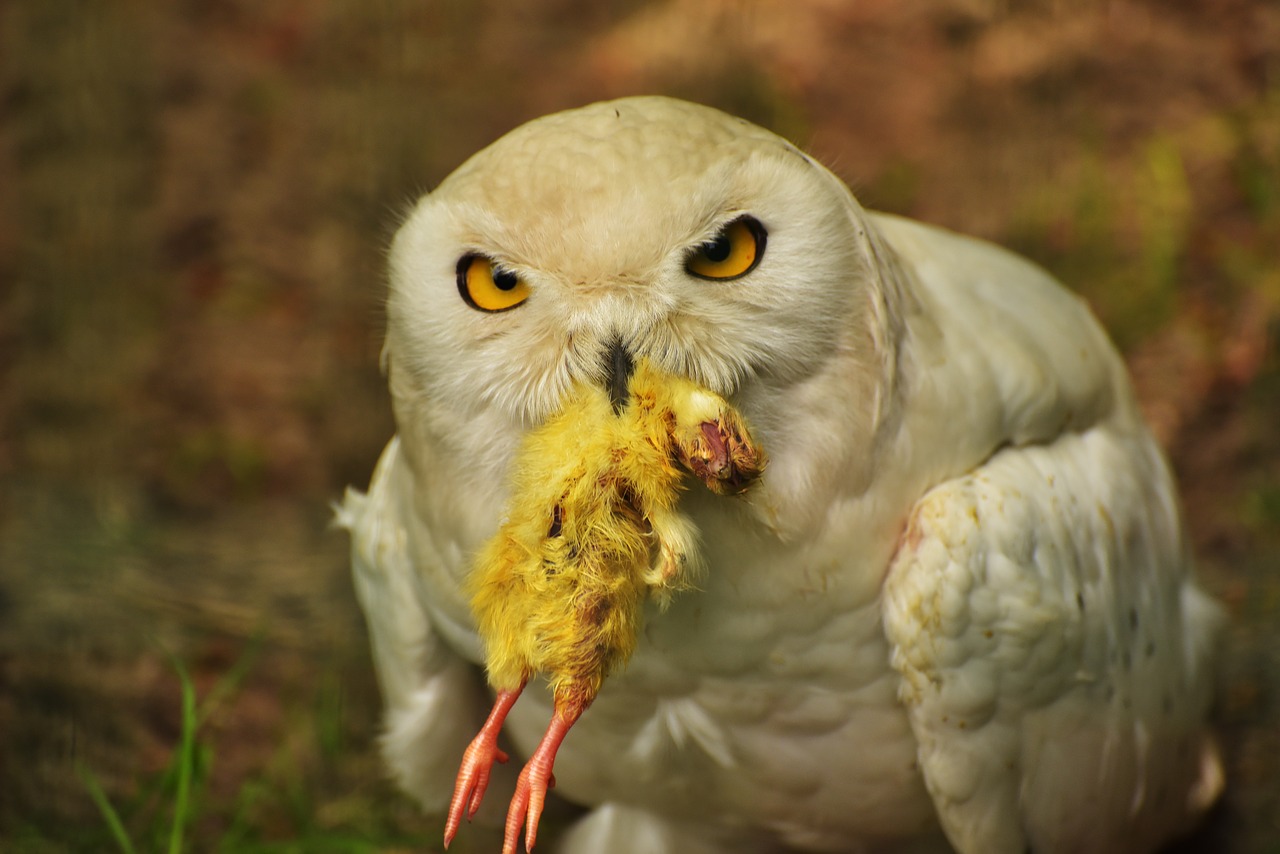
The Arctic tundra is a realm of stark beauty and relentless survival, where apex predators like the snowy owl (Bubo scandiacus) reign as silent sentinels of ecological balance. Beneath their piercing yellow eyes and feathery camouflage lies a hidden archive of the Arctic’s shifting food webs—one that can only be deciphered through the meticulous analysis of their regurgitated pellets. These undervalued biological artifacts, often dismissed as mere remnants of digestion, are in fact treasure troves of data, revealing not just the dietary habits of these magnificent birds but also the cascading impacts of climate change on an ecosystem teetering on the edge of transformation. By dissecting snowy owl pellets, scientists unlock narratives of prey abundance, habitat degradation, and the delicate interplay between predator and prey in one of Earth’s most fragile biomes. This exploration transcends ornithology; it is a feminist critique of human intervention in natural systems, exposing how our actions—from industrial emissions to land-use policies—reshape the lives of creatures that have evolved over millennia to thrive in ice and solitude.
The Anatomy of a Pellet: A Microscopic Odyssey
To the untrained eye, a snowy owl pellet is a compact, oblong mass of fur and bone, casually expelled near a roosting site. But within this unassuming bundle lies a labyrinth of forensic clues. When dissected, pellets reveal a stratified composition: an outer sheath of tightly matted fur, often from lemmings or voles, encasing a chaotic core of skeletal fragments—skulls, femurs, and ribs—interspersed with the chitinous exoskeletons of insects. The precision of this packaging is no accident; it is the result of an owl’s digestive alchemy, where keratinous fur and indigestible bones are compressed into a single, cohesive unit through the muscular action of the gizzard. Each pellet is a snapshot of a single feeding event, frozen in time, offering a glimpse into the owl’s nocturnal hunts across the frozen expanse. The size and density of pellets can even hint at the owl’s age and health, with larger, more robust pellets suggesting a mature, well-fed individual, while smaller, fragmentary ones may indicate nutritional stress or juvenile inexperience.
From Fur to Fossil: Decoding Prey Identity
The true power of pellet analysis lies in its ability to reconstruct the diet of snowy owls with astonishing accuracy. By identifying the bones and teeth trapped within these regurgitations, researchers can compile a dietary ledger that spans seasons and years. In the Arctic, where prey populations fluctuate wildly with the ebb and flow of snowmelt and plant growth, snowy owls exhibit a remarkable dietary plasticity. Lemmings, those charismatic tundra rodents, often dominate the menu, their population cycles dictating the owls’ breeding success. Yet, pellets from different regions reveal stark contrasts: in coastal areas, seabird remains—puffin skulls, auk feathers—may dominate, while inland pellets bristle with the bones of Arctic hares or even the occasional fish. The presence of unexpected prey, such as songbirds or insects, can signal ecological disruption, hinting at the collapse of traditional food chains or the intrusion of southern species into the tundra’s fragile domain. This dietary detective work is not merely academic; it is a feminist act of listening to the voices of the voiceless, the small creatures whose fates are dictated by forces beyond their control.
Climate Change as the Invisible Predator
The Arctic is warming at a rate three times faster than the global average, and snowy owl pellets are bearing the scars of this transformation. As permafrost thaws and snowpack dwindles, the habitats of lemmings and voles shrink, their burrows collapsing into muddy sloughs. Pellets from recent decades show a disturbing trend: a decline in lemming remains, replaced by a proliferation of alternative prey like ptarmigan or even carrion. This dietary shift is not a sign of adaptability but of desperation, a forced migration from the owl’s evolutionary niche. In some regions, pellets now contain the bones of species that were once rare or absent, such as red foxes or even domestic dogs, a grim testament to the breakdown of ecosystem boundaries. The Arctic, once a bastion of stability, is becoming a laboratory of chaos, where the rules of survival are rewritten daily. For feminist ecologists, this is a stark reminder that climate change is not a gender-neutral crisis; it disproportionately burdens marginalized communities and non-human life forms, whose resilience is tested by human-induced upheaval.
Gendered Survival: The Role of Female Owls in Dietary Research
Snowy owl pellets are not just ecological documents; they are also feminist artifacts. Female snowy owls, larger and more aggressive than their male counterparts, often occupy the most productive hunting grounds, where prey is abundant. Their pellets, therefore, tend to be richer in content, offering a more detailed dietary record. By analyzing pellets from female owls, researchers can uncover the hidden labor of these apex predators, whose survival strategies are often overshadowed by the more visible behaviors of males. In some studies, female pellets have revealed a higher incidence of larger prey, suggesting that they are less constrained by the energy demands of territorial defense and more focused on provisioning their young. This gendered lens on pellet analysis challenges the androcentric biases in ecological research, where male behavior is often the default subject of study. The female snowy owl, with her silent hunts and unyielding persistence, becomes a symbol of resilience in a world that too often overlooks the contributions of women—both human and non-human.
Toxic Legacies: Heavy Metals and the Silent Poisoning of the Arctic
Beyond bones and fur, snowy owl pellets can also reveal the insidious presence of human-made toxins. As apex predators, snowy owls bioaccumulate heavy metals like mercury and lead, which leach into the Arctic ecosystem through industrial pollution and long-range atmospheric transport. Pellets from owls in industrialized regions often contain elevated levels of these contaminants, their fur matted with microscopic particles of mercury that have traveled thousands of miles from coal-fired power plants or mining operations. The effects are devastating: reduced fertility, neurological impairment, and weakened immune systems. For feminist scholars, this is a poignant metaphor for the way systemic oppression—whether through pollution, economic exploitation, or climate injustice—permeates every level of the natural world. The snowy owl, like the marginalized human communities of the Arctic, bears the brunt of decisions made far beyond its frozen domain, its body a living archive of our collective failures.
Citizen Science and the Democratization of Pellet Analysis
The study of snowy owl pellets is no longer the exclusive domain of elite researchers. Citizen science initiatives, such as the Global Owl Project, have empowered communities—from Inuit hunters to schoolchildren in urban centers—to contribute to pellet analysis. By crowdsourcing data, these programs not only expand the scope of research but also foster a deeper connection between people and the Arctic. Participants learn to identify bones, measure prey remains, and upload findings to open-access databases, creating a decentralized network of ecological knowledge. This democratization of science is a feminist act, challenging the gatekeeping of traditional academia and centering the voices of those who have long been excluded from environmental discourse. The snowy owl, once a distant myth in southern imaginations, becomes a bridge between cultures, a shared symbol of the Arctic’s fragility and resilience.
From Pellets to Policy: Advocating for the Arctic’s Future
The data gleaned from snowy owl pellets is not merely academic; it is a call to action. As climate change accelerates and industrial exploitation encroaches on the Arctic, the stories told by these regurgitated masses demand to be heard. Policymakers must heed the warnings embedded in owl pellets: the decline of lemmings, the rise of invasive species, the silent poisoning of the food web. Feminist ecologists, in particular, must advocate for policies that center the needs of the Arctic’s most vulnerable inhabitants, from the snowy owl to the Inuit communities who depend on these ecosystems for their survival. This means pushing for stricter regulations on industrial emissions, supporting Indigenous-led conservation efforts, and challenging the extractive industries that treat the Arctic as a resource colony rather than a living, breathing entity. The snowy owl’s pellets are not just scientific specimens; they are manifestos, demanding a reimagining of our relationship with the natural world.
The Arctic is not a remote, untouched wilderness. It is a mirror, reflecting the consequences of human actions back at us in the form of fragmented bones and matted fur. By listening to the stories told by snowy owl pellets, we confront the urgency of our time—not just as scientists or activists, but as stewards of a planet in crisis. The owl’s diet is not merely a matter of survival; it is a testament to the interconnectedness of all life, a reminder that no species, no ecosystem, exists in isolation. In the frozen silence of the tundra, the snowy owl speaks, and we must learn to listen.