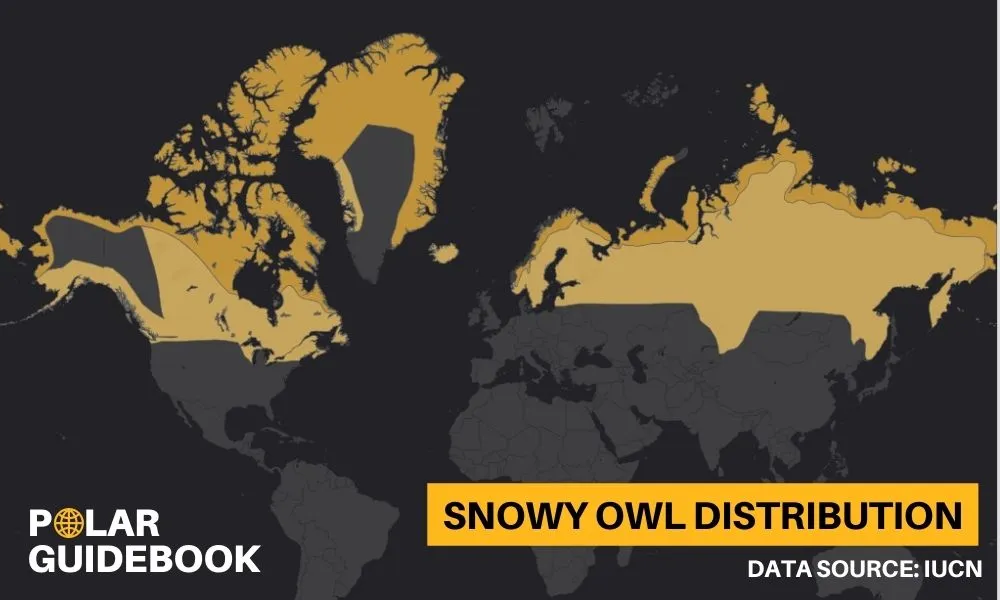
The Arctic tundra, a vast and windswept expanse of ice and snow, has long been the domain of the snowy owl—a creature of mythic endurance, its white plumage a whisper against the endless horizon. Yet, as the planet warms, this frozen kingdom is unraveling, and with it, the fate of one of nature’s most enigmatic predators. By 2050, climate models paint a starkly different map of the snowy owl’s world, one where the boundaries of its existence are redrawn by forces beyond its control. This transformation is not merely a shift in geography; it is a reckoning with the fragility of life in a world where human hands have tipped the scales of balance.
The Vanishing Realm: How Warming Temperatures Reshape the Arctic
The Arctic is warming at a rate nearly four times faster than the global average—a phenomenon known as Arctic amplification. This relentless heat is not just melting ice; it is dismantling an entire ecosystem built upon the bedrock of permafrost and snow. For the snowy owl, whose survival hinges on the presence of lemmings and other small mammals thriving in these cold climes, the loss of stable, frozen ground is catastrophic. Lemmings, those unassuming yet vital prey, depend on the insulating layer of snow to shield their burrows from the biting cold. As winters grow shorter and milder, their populations fluctuate wildly, leaving owls to face the cruel calculus of feast or famine. The owl’s legendary nomadic wanderings, once a survival strategy honed over millennia, now lead it into uncharted territories where the old rules no longer apply.
The Great Migration: Where Will the Owls Go?
By 2050, climate models project that the snowy owl’s range will contract dramatically in the southern Arctic, pushing it northward into the High Arctic islands and the northernmost fringes of Canada and Greenland. Yet, this exodus is not a simple relocation—it is a desperate scramble for survival. The southern tundra, once a reliable hunting ground, will become a patchwork of fragmented habitats, where lemming populations collapse under the strain of erratic weather. The owls that remain may find themselves in a paradoxical trap: too far north to escape the worst of the warming, yet too exposed to the ecological upheaval wrought by shifting prey dynamics. Some may venture into boreal forests, a realm foreign to their instincts, where competition with other predators and the absence of open hunting grounds could seal their fate.
The Lemming Paradox: A Prey in Peril
At the heart of the snowy owl’s story lies the lemming—a small, unassuming rodent whose fate is inextricably linked to the owl’s own. Lemmings are cyclical creatures, their populations booming and crashing in predictable rhythms tied to snow depth and food availability. But as the Arctic thaws, these cycles are disrupted. Shorter winters mean less snow cover, leaving lemmings vulnerable to predation and extreme cold snaps. The owl, an apex predator in this frozen world, now faces a cruel irony: the very prey it depends on is disappearing at the hands of the same climatic forces that are reshaping its own habitat. Without lemmings, the owl’s reproductive success plummets, and its legendary irruptions—those mass migrations southward in search of food—become less a spectacle of nature’s abundance and more a desperate plea for survival.
The Human Shadow: How Our Choices Cast a Long Reach
To understand the snowy owl’s plight is to confront the weight of human influence. The Arctic’s transformation is not a natural phenomenon but a consequence of industrialization, fossil fuel combustion, and the unchecked expansion of our carbon footprint. The owl’s struggle is a microcosm of a larger crisis, one where the boundaries between human and wild are eroding. Industrial activities, from oil drilling to shipping lanes, carve through the Arctic’s fragile ecosystems, further fragmenting habitats and introducing new threats. Even the most remote corners of the planet are no longer untouched by our presence. The snowy owl, once a symbol of untamed wilderness, now stands as a sentinel of the Anthropocene—a creature whose survival is a testament to our capacity for both destruction and redemption.
The Silent Witness: What the Owl’s Decline Reveals
The snowy owl’s decline is more than a biological footnote; it is a mirror held up to the fragility of life on Earth. As the Arctic melts, it reveals the interconnectedness of all things—the way a single degree of warming can unravel food webs, displace species, and alter the very fabric of ecosystems. The owl’s story is a cautionary tale, a reminder that the natural world is not a static backdrop but a dynamic, ever-shifting tapestry. Its disappearance would leave a void not just in the Arctic’s biodiversity but in the cultural imagination—a loss of a creature that has inspired myths, art, and scientific wonder for centuries. What does it say about us that we are willing to let such a symbol fade into obscurity?
The Path Forward: Can the Snowy Owl Survive?
The future of the snowy owl is not yet written, but the ink is running thin. Conservation efforts, from habitat protection to climate mitigation, offer a glimmer of hope. Protected areas in the High Arctic could serve as refuges, while global efforts to curb emissions might slow the pace of warming. Yet, the owl’s fate is inextricably tied to the lemming’s—a reminder that salvation requires more than just saving one species. It demands a reckoning with the systems that have brought us to this precipice. The snowy owl’s story is a call to action, a plea to recognize that the Arctic is not a distant, abstract place but a living, breathing entity whose survival is intertwined with our own. The question is not just where the owl will live by 2050, but whether we will choose to share the Earth with it at all.