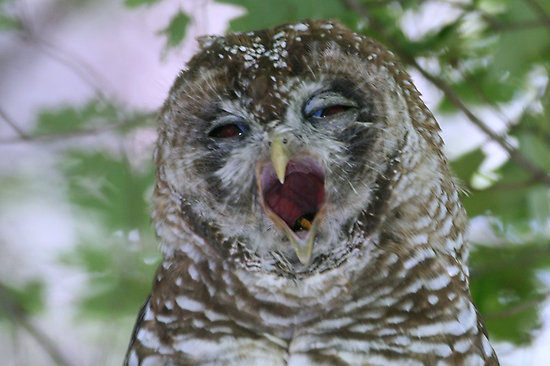
Can the humble spotted owl, cloaked in twilight and mystery, find salvation in the cold, calculated embrace of technology? At first glance, the idea seems almost paradoxical. How can silicon circuits and digital sensors possibly intertwine with the delicate rhythms of an ancient forest dweller whose very existence hinges on secrecy and solitude? Yet, this very conundrum propels conservationists into a realm where innovation dances with ecology, crafting solutions to challenges that once seemed insurmountable.
Harnessing the Power of Remote Sensing for Habitat Monitoring
One of the quintessential battlegrounds in spotted owl conservation is the protection and preservation of their dwindling habitats. Here, the application of remote sensing technology emerges as a veritable game-changer. Satellite imagery, combined with aerial drone surveillance, enables biologists to survey vast stretches of forest with impeccable precision, often circumventing the arduous treks through challenging terrains.
By analyzing multispectral images, scientists can detect subtle variations in forest canopy density, moisture levels, and signs of logging or wildfires. This granular insight allows for immediate response to habitat degradation, mapping the ebb and flow of the owl’s living environment with unprecedented clarity. The challenge lies in translating immense volumes of data into actionable intelligence that can be mobilized swiftly yet cautiously, ensuring minimal human disruption.
Acoustic Monitoring: Listening to the Forest’s Whispered Secrets
What if we could eavesdrop on the forest’s conversations to better understand its elusive inhabitants? Enter acoustic monitoring—a sophisticated method where strategically placed microphones capture the faint calls of spotted owls across their territories. These audio snippets, often inaudible to the human ear over distance or ambient noise, are transformed by software algorithms into patterns that identify individual owls and assess population densities.
This non-invasive technique represents a quantum leap in how data is collected. Unlike traditional tracking, it does not disturb the owls or their habitats. However, it also presents its own alterations: differentiating the calls of multiple cohabiting species, filtering out environmental noise, and interpreting signals without visual confirmation demands advanced machine learning models and significant computational power.
Genetic Technologies: Decoding the Blueprint of Survival
The frontier of genetics offers a fascinating dimension to owl conservation. DNA sampling, once confined to laboratory settings, is now increasingly manageable through field-based kits and environmental DNA (eDNA) extraction from feathers, droppings, or even soil. These genetic blueprints grant researchers insights into the genetic diversity and health of owl populations—indicators of their resilience to disease, environmental change, and inbreeding pressures.
Genomics also aids in identifying distinct subspecies and understanding migratory patterns or mating tendencies, which are crucial for crafting targeted conservation strategies. Yet, this scientific treasure trove brings with it ethical and practical dilemmas: how to balance the invasive nature of genetic sampling with the imperative to protect these creatures, and how to judiciously apply this knowledge without reducing complex ecosystems to mere genetic codes.
Artificial Intelligence: The New Guardian in the Shadows
Artificial Intelligence (AI) stands at the nexus of ecology and technology, synthesizing data from myriad sources to predict trends and offer proactive measures. AI-powered models can forecast the impacts of climate change on owl habitats, simulate outcomes of different conservation interventions, and even optimize patrol routes for field teams by identifying hotspots of illegal logging or poaching.
The real allure of AI lies in its capacity for continuous learning—adapting to new data inputs and refining conservation policies in near real-time. Yet, the black-box nature of some AI algorithms can obscure the rationale behind decisions, potentially alienating stakeholders who value transparency. Moreover, over-reliance on technology risks marginalizing the invaluable traditional knowledge held by local communities and indigenous peoples.
Community Engagement Through Technology: Bridging Divides
Can technology also serve as a bridge rather than a barrier? Indeed, digital platforms and smartphone applications empower local communities and citizen scientists to participate actively in spotting, reporting, and protecting the spotted owl. GPS-enabled apps can crowdsource sightings, feeding into centralized databases that bolster monitoring efforts.
This democratization of conservation data collection fosters a sense of shared guardianship and raises awareness at grassroots levels. However, it also requires careful management to ensure data quality and to prevent misinformation or unintended disturbances to sensitive habitats caused by well-meaning but inexperienced participants.
Challenges and Ethical Considerations in Technological Interventions
While technology opens doors, it also prompts a crucial question: does the intrusion of gadgets and algorithms risk overshadowing the nuanced, organic relationships that define ecosystems? The deployment of technology must be tempered with humility and respect for natural complexity. Issues such as data privacy, potential habitat disruption by monitoring devices, and the prioritization of funding for tech over on-the-ground conservation efforts demand vigilant ethical scrutiny.
Furthermore, the specter of technology becoming a panacea fosters complacency, potentially sidelining essential habitat restoration and policy advocacy in favor of increasingly sophisticated gadgets. Conservation, after all, is as much about people and politics as it is about science and technology.
The Future: Harmonizing Innovation with Nature’s Wisdom
Looking ahead, the role of technology in spotted owl conservation is poised to expand, integrating emergent fields such as bioacoustics-inspired sensor arrays, satellite-enabled real-time monitoring, and augmented reality tools for community education. The ultimate challenge will be weaving these innovations into a coherent tapestry that honors the owl’s intrinsic connection to its habitat.
Can machines truly appreciate the twilight hush of an old-growth forest or the fragile balance maintained by a wingbeat in the night? Perhaps not. Yet, when wielded with careful intent, technology may become the silent sentinel that amplifies human stewardship, ensuring that the spectral beauty of the spotted owl continues to grace our forests for generations to come.