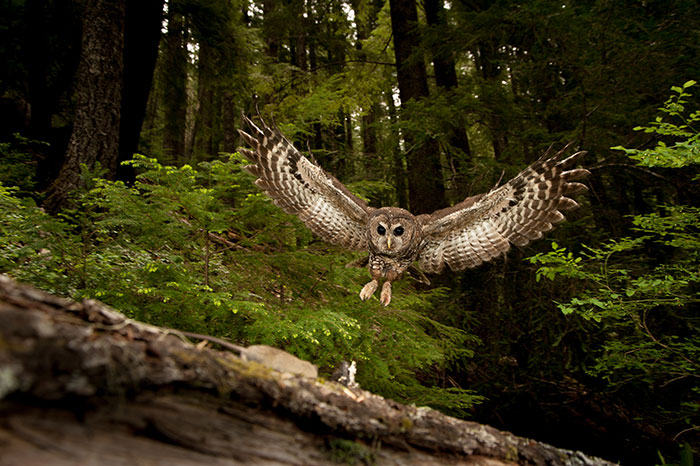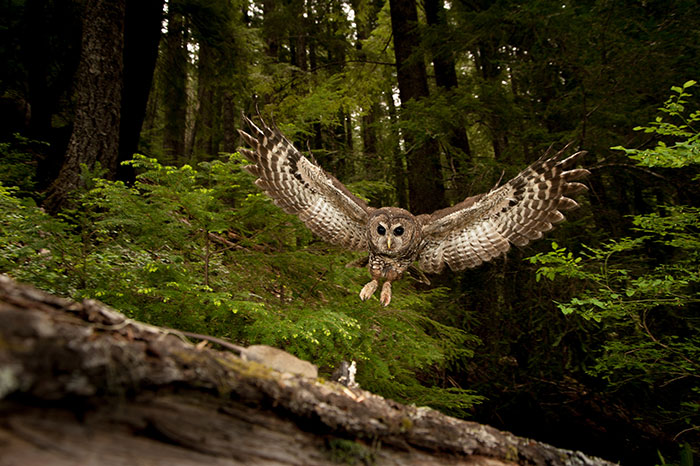
In the tangled heart of our forests, a silent sentinel prowls the shadows—an emblem of ecological fragility and resilient mystery. The Spotted Owl, with its haunting gaze and ghostly flight, epitomizes the delicate equilibrium between human industry and the natural world. Creating habitats that nurture these enigmatic birds within managed forests demands not just conventional forestry practices but a profound paradigm shift. It challenges us to reconcile our ambitions with the imperative of preserving a species whose very existence whispers tales of dwindling wilderness and the urgent choreography of coexistence.
Redefining Forest Stewardship: Beyond Timber Extraction
Conventional managed forests often prioritize timber yield, disregarding the intricate tapestry of life woven beneath the canopy. Crafting Spotted Owl-friendly habitats beckons forestry to evolve from exploitative enterprise to sensitive stewardship. This transformation begins by recognizing that forests are more than economic assets—they are living sanctuaries. Integrating biodiversity objectives into forest management plans is not a marginal gesture but a foundational tenet. This means adopting silvicultural regimes that preserve mature trees, retaining snags and downed logs essential for foraging and nesting. It requires forest managers to embrace a philosophy that views trees as life-givers, not mere commodities.
Preserving Old-Growth Analogues Within Managed Landscapes
Spotted Owls are intimately tied to complex, multilayered old-growth forests—ecosystems marked by towering conifers, rich understories, and labyrinthine branches. While true old-growth reserves are rare, managed forests can cultivate “old-growth analogues.” These are patches where selective harvesting is tempered to maintain critical structural features: large live trees with cavities, multi-layered canopies, and an abundance of moss and lichen. Strategic retention of these elements fosters microhabitats essential for nesting and roosting. Creating these oases requires patience and precision—forestry operations must anticipate decades ahead, crafting a mosaic of habitats that simulate ancient forest conditions even as they yield resources.
Spatial Complexity: The Architecture of Habitat Quality
Habitat quality is not merely about presence but configuration. Spotted Owls need contiguous expanses of suitable habitat that accommodate their territorial nature and hunting strategies. Fragmentation—resulting from roads, clear-cuts, and scattered logging—can disorient owls and expose them to predators and competitors. Thoughtful spatial planning involves designating core habitat blocks buffered by zones of reduced human activity. Connectivity is paramount; corridors of dense, mature forests serve as passageways, maintaining genetic flow and population resilience. The dance of mapping habitats must balance ecosystem connectivity with viable timber extraction zones, intertwining ecological wisdom with pragmatic forestry.
Promoting Prey Abundance Through Ecosystem Diversity
Spotted Owls subsist primarily on small mammals—particularly flying squirrels and wood rats—that thrive in structurally complex forests. Building habitats conducive to prey abundance means encouraging a rich understory and maintaining a diversity of plant species. Multi-aged forest stands create layered environments where prey animals find shelter and forage. Retaining debris such as logs and leaf litter enriches soil communities, fostering robust food webs. Forest management must thus extend its gaze beyond the owl, nurturing the entire ecosystem that sustains it. The success of a Spotted Owl-friendly habitat hinges upon this intricate food chain symphony.
Mitigating Disturbance: Timing and Techniques
Disturbance can be the shadow looming over Spotted Owl habitat viability. Logging activities, vehicular traffic, and human presence during critical breeding periods cause stress and reproductive failures. To craft owl-friendly conditions, disturbance must be minimized especially between March and August, when nesting activity peaks. Employing low-impact harvesting techniques—such as single-tree selection rather than clear-cutting—reduces noise and habitat destruction. Limiting road construction and restricting access to sensitive zones during breeding seasons are equally vital. Thoughtful timing and gentler methods form a choreography that respects the owl’s lifecycle rhythm.
Incorporating Adaptive Management and Monitoring
Forests are dynamic, and creating suitable Spotted Owl habitats demands flexibility and vigilance. Adaptive management—a framework that embraces learning and adjustment—ensures that conservation efforts are responsive to ecological feedback. Regular monitoring of owl populations, nesting success, and habitat conditions informs decisions, revealing emerging challenges or unexpected opportunities. This iterative approach fosters an intimate understanding of how managed forests can serve dual roles. Data-driven adjustments can refine timber practices, improve habitat restoration efforts, and ultimately fortify the fragile alliance between industry and biodiversity.
Engaging Stakeholders: The Social Dimension of Habitat Creation
Creating Spotted Owl-friendly habitats is not solely a biological endeavor; it is a social pact. Forest managers, conservationists, indigenous communities, and policymakers form a nexus bound by shared responsibility. The emergence of collaborative forest governance promotes inclusive dialogue and harmonizes often competing interests. Encouraging community involvement strengthens stewardship ethics and builds the cultural foundation necessary for long-term habitat success. When local knowledge intertwines with scientific insight, innovation flourishes. This collective engagement kindles hope and redefines what it means to live symbiotically with the wild.
Future Horizons: Reimagining Forests as Sanctuaries
The journey toward Spotted Owl-friendly managed forests invites us to envision ecosystems not as static, utilitarian spaces but as vibrant, resilient habitats. It calls for a profound shift—a reconceptualization of forest landscapes as sanctuaries where diverse life thrives amid careful human intervention. Such a vision promises more than survival for the Spotted Owl; it offers a blueprint for sustainability that reverberates across species and generations. Embracing this challenge illuminates a path toward forests that honor both their ancient lineage and their dynamic future, compelling us to listen closely and act wisely.