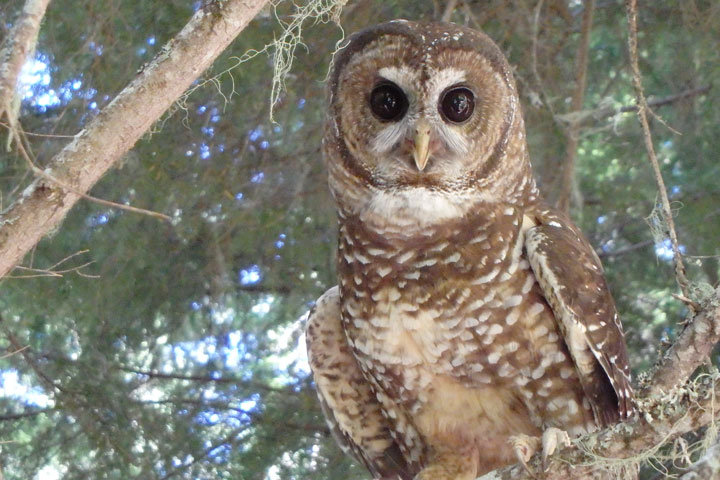
Wildfires have long commanded a paradoxical fascination among people—both as catastrophic forces of nature and as purveyors of natural renewal. Yet, nestled within this duality lies an intricate and often overlooked narrative: the vulnerability of the threatened spotted owl and the sanctity of its habitats. Observers frequently note the dramatic aftermath of wildfires—the charred landscapes, the acrid smoke, the altered ecosystems—but underlying this spectacle is a profound ecological disturbance that resonates far beyond the burnt timber. The plight of the spotted owl amidst these infernos reveals a story of deep environmental concern, where the intersection of wildfire dynamics and species preservation unveils complexities that merit urgent attention.
The Enigmatic Allure of Wildfire and Its Ecological Duality
The sight of a wildfire evokes a visceral reaction—a simultaneous dread and hypnotic captivation. Flames devouring forests, smoke trailing into the heavens, the raw power of destruction—all these elements contribute to a compelling natural drama. Yet, wildfires are not solely agents of devastation. They are also crucial for forest regeneration, nutrient cycling, and habitat diversification. Many ecosystems have evolved with fire as an integral process, shaping plant succession and animal populations in its aftermath.
However, this ecological duality complicates the narrative when viewed through the lens of endangered species habitats. The spotted owl, an arboreal sentinel of old-growth forests, thrives in ecosystems historically characterized by longevity and stability. The intersection of this species’ habitat requirements and the increasing frequency and intensity of wildfires unveils tensions between natural disturbance regimes and conservation imperatives.

The Unique Habitat Requirements of the Spotted Owl
The spotted owl is no ordinary bird; it is emblematic of the intricate web of dependencies that old-growth forests nourish. Preferring dense, mature stands of conifers, with layered canopies, abundant snags, and complex understory vegetation, the owl’s habitat is a sanctuary of ecological stability. These forests provide not only shelter but also prey availability, such as small mammals, that rely on these structural complexities.
Crucially, the owl’s requirement for contiguous tracts of uninterrupted forest means that fragmentation—whether from logging, development, or wildfire—significantly jeopardizes their survival. The habitat’s structural intricacy, built over centuries, cannot be swiftly replaced, making recovery from disturbance tenuous at best.
Wildfires’ Immediate and Protracted Effects on Owl Habitat
When wildfire sweeps through a forest, the immediate impact on owl habitat is profound and brutal. The flames consume canopy cover, alter microclimates, and reduce prey abundance drastically. The scorched landscape becomes inhospitable, forcing owls to relocate or face starvation. Yet, the damage is not merely instantaneous; it persists through decades as the forest regenerates and the environment slowly reshapes itself.
Moreover, intense wildfires exacerbate habitat fragmentation. The resulting mosaic of burned and unburned patches isolates populations, hindering gene flow and increasing vulnerability to predation and competition. In some cases, intense fires result in habitat conversion, where the forest fails to regenerate in its prior form, instead giving way to shrublands or grasslands unsuitable to the owl’s needs.
The Role of Climate Change in Amplifying Wildfire Risks
Climate change acts as a catalytic force, amplifying the frequency, intensity, and extent of wildfires. Warmer temperatures and prolonged drought periods desiccate vegetation, creating tinderboxes primed for ignition. The lengthening of fire seasons and the occurrence of more extreme fire weather conditions exacerbate disturbances in forest ecosystems.
In the context of the spotted owl, this translates into a sharp escalation of threats. Their already scarce and fragmented habitat faces a relentless onslaught of wildfire events, often more severe than historical fire regimes to which these ecosystems had adapted. As a consequence, the resiliency of these forests and the species they harbor diminishes markedly.
Conservation Challenges and Management Paradoxes
Addressing the impact of wildfires on spotted owl habitats involves confronting a series of challenging trade-offs. Forest management practices, such as thinning and prescribed burns, aim to reduce fuel loads and mitigate catastrophic wildfires. Yet, these interventions can inadvertently disrupt the very habitats they seek to protect by removing critical old-growth structures or disturbing sensitive species.
Striking a balance between reducing fire risk and preserving habitat complexity remains a daunting task. The intensification of wildfires has compelled conservationists and land managers to rethink traditional approaches, integrating adaptive strategies that emphasize landscape heterogeneity, connectivity, and long-term ecosystem health.
Human Influence Beyond Wildfire: Synergistic Pressures on Owl Populations
Wildfires are only one thread in the complex tapestry of anthropogenic pressures entangling spotted owls. Logging, urban expansion, and invasive species collectively erode habitat quality and availability. The recursive effect of these stressors, paired with increasing wildfire disturbance, compounds the threat to owl populations.
For instance, habitat fragmentation from logging creates firebreaks but simultaneously isolates owl territories. Conversely, unmitigated wildfire occurrences in logged landscapes can induce habitat losses that exceed natural historical variances. These overlapping impacts demand integrated land-use planning and multi-disciplinary collaboration to safeguard the future of these emblematic forest dwellers.
The Deeper Fascination: Why Spotted Owls and Wildfires Captivate Us
The continued public fixation on wildfires and spotted owls transcends mere ecological interest; it pierces to the core of how we perceive nature’s fragility and resilience. The spotted owl symbolizes a vanishing world, one of ancient forests and intricate ecological interdependencies. Wildfires, both adversary and architect, remind us of nature’s power to undo and recreate.
In observing the interplay between these forces, we confront a poignant question about our stewardship of the natural world. Their story unfolds as a powerful metaphor for broader environmental tensions: conservation versus development, natural disturbance versus human-induced change, short-term survival versus long-term sustainability.
Pathways Toward Coexistence and Recovery
Confronting the challenges posed by wildfires to spotted owl habitats requires a fusion of science, policy, and community engagement. Reforestation efforts, coupled with habitat restoration that prioritizes structural complexity, are essential for fostering recovery. In addition, advancements in fire behavior modeling and remote sensing allow more precise assessments and proactive management interventions.
Engendering a coexistent relationship with fire regimes involves acknowledging fire’s natural role while mitigating its catastrophic extremes exacerbated by anthropogenic climate influences. Collaborative stewardship involving indigenous knowledge, ecological science, and stakeholder participation provides the best route toward resilient landscapes that can nurture both spotted owls and wildfire-adapted ecosystems.
Conclusion: A Call to Action for an Endangered Ecosystem
The intricate dance between wildfires and spotted owl habitats encapsulates an urgent and compelling environmental challenge. As wildfires deepen their imprint on the fragmented old-growth forests, the survival of the spotted owl hangs precariously in balance. This narrative demands more than passive observation; it calls for informed, decisive action that respects the complexity of natural systems and the species they sustain.
In embracing this challenge, there lies an opportunity not only to preserve a species but to redefine our relationship with nature’s most ancient and dynamic processes. The story of the spotted owl and its fiery trials beckons us to confront our impact and inspires a vision for a resilient future where coexistence is more than an ideal—it is a necessity.