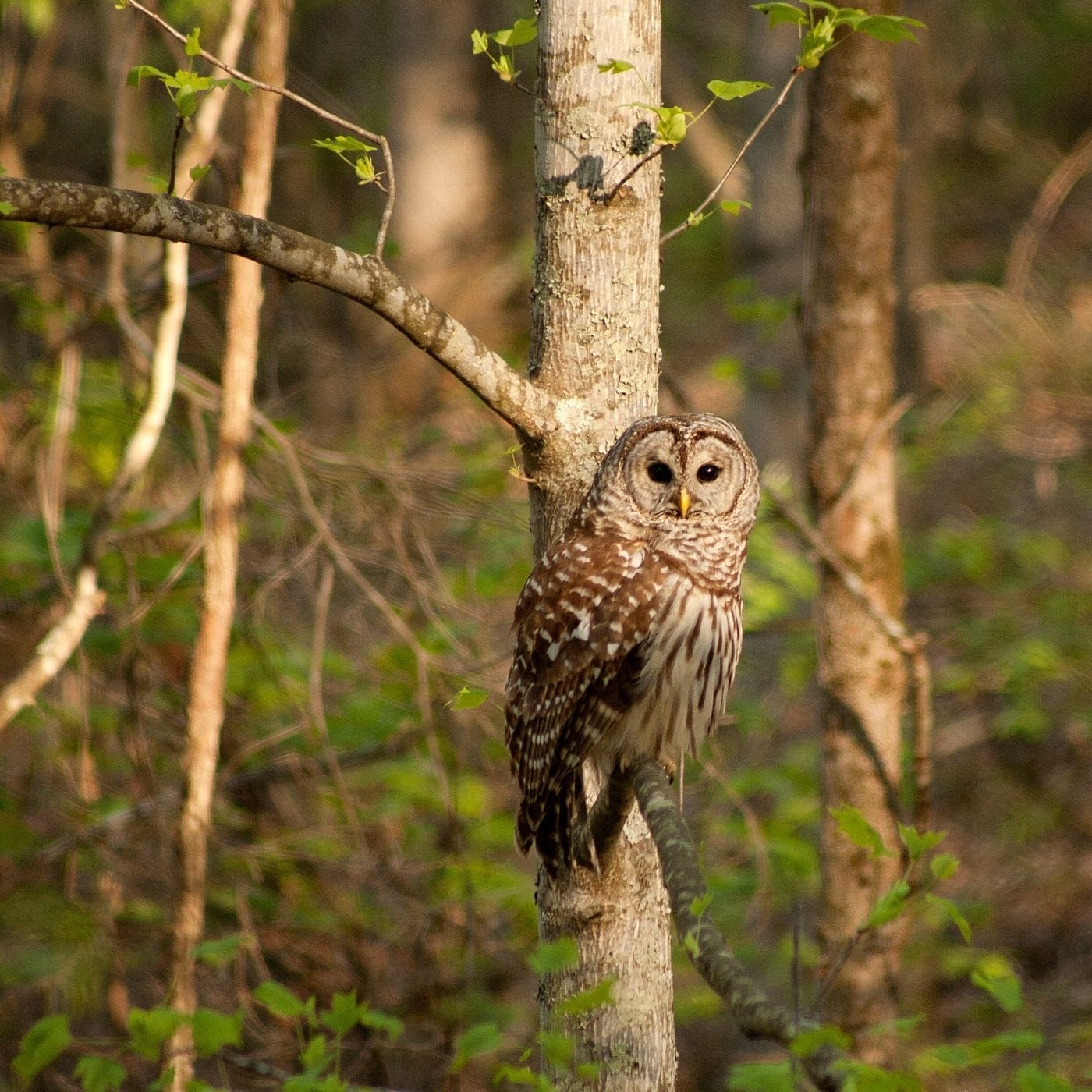
In the delicate tapestry of our shared ecosystems, the barred owl emerges as a shadowy enigma—both a symbol of wilderness charm and a source of human-wildlife conflict. Its haunting call echoes like a whispered secret from the dusk, weaving through forests and suburban edges alike. Yet, behind this ethereal allure lies a growing challenge: when these nocturnal prowlers take residence where they are unwelcome, removal becomes a contentious endeavor. Does barred owl removal truly work, or is it an attempt to silence the wild’s resilient refrain? Delving into the data reveals a complex dance between intervention and nature’s persistence.
The Barred Owl’s Unique Ecological Footprint
The barred owl (Strix varia) is no ordinary creature; it’s a nocturnal sentinel whose presence is etched deep into North American woods. With its dark eyes and distinctive barred plumage—resembling ancient runes carved in feathers—it commands both respect and wariness. Its adaptability to diverse habitats—from dense old-growth forests to suburban woodlots—underlines its ecological versatility. This adaptability makes barred owls particularly challenging to manage because their niche overlaps with several other species, including the northern spotted owl, a species of high conservation concern.
Barred owls’ diet is a microcosm of their adaptability: from small mammals and birds to amphibians, they reshape local food webs with quiet efficiency. Their presence can impart ripples through predator-prey dynamics, leading to competitive exclusion or displacement, especially where their range overlaps with other owl species. Removing barred owls thus does not merely extract a single species; it untangles a complex web of relationships, requiring nuanced consideration beyond mere population control.

The Rationale Behind Barred Owl Removal
Why does barred owl removal become necessary? At its core, the motivation springs from ecological balance and the protection of endangered avian neighbors. In the Pacific Northwest, for instance, barred owls have expanded their territory, outcompeting the more elusive and vulnerable northern spotted owl. This territorial encroachment threatens the delicate equilibrium that conservationists strive to maintain. Removal efforts focus on mitigating this dominance to preserve biodiversity.
However, removal is laden with ethical, ecological, and practical dilemmas. These birds are sentient beings, woven into the ecosystem’s fabric. Their removal can be perceived not only as a method of control but as a poignant negotiation with nature itself. The act evokes parallels to pruning a flourishing, intertwined garden—cutting back one vine may allow others to thrive, but it also risks disturbing the harmony of the whole.
Techniques and Methodologies in Barred Owl Removal
Barred owl removal is rarely straightforward. The methodologies range from non-lethal deterrents to humane trapping and, in contentious cases, lethal removal. Non-lethal approaches—like auditory deterrents, habitat modification, and exclusion devices—attempt to coax owls away without trauma. Yet, barred owls are notoriously tenacious, often adapting or simply relocating nearby, which complicates these efforts.
Humane trapping, executed under strict regulatory frameworks, involves capturing owls for either relocation or controlled euthanasia, particularly in areas where their presence imperils protected species. The precision required for such operations demands expertise, as the slightest misstep can harm the owls or disrupt local ecology further. Each removal is a temporary silence in the wild’s ongoing symphony, a fleeting interlude that invites nature to decide the next movement.
Evaluating Effectiveness: The Data So Far
Does barred owl removal achieve its intended objectives? Data points offer a chiaroscuro of outcomes. Studies from rigorous conservation programs reveal that strategic removal can reduce barred owl density in targeted areas, providing respite for vulnerable species like the northern spotted owl. Population monitoring post-removal demonstrates modest recovery trends, suggesting an operational success in shifting competitive balance.
Yet, this success is often ephemeral. Barred owls can rapidly recolonize vacated territories, exemplifying the resilient spirit of wildlife. Repeated intervention may be necessary, underscoring that removal is more a management tool than a curative solution. Ecological factors, such as forest structure, prey availability, and broader landscape connectivity, heavily influence long-term outcomes, marking a need for integrative strategies beyond removal alone.
Ecological and Ethical Considerations
The act of removal stirs deeper philosophical currents about humanity’s role as steward or intruder within ecosystems. Barred owls, while sometimes labeled as invaders, are native species expanding their range possibly due to anthropogenic habitat changes. This expansion embodies an unintentional consequence of human influence, blurring lines between natural processes and management interventions.
Ethically, removal raises questions about valuing certain species over others. Prioritizing the survival of species like the northern spotted owl necessitates difficult trade-offs, often perceived as playing god. Thus, barred owl removal is not simply a biological decision but a moral negotiation—it requires balancing the protection of imperiled species against the rights of the adaptable wild to survive and flourish.
Looking Forward: Integrative Approaches for Sustainable Management
The future of barred owl removal lies in embracing holistic, adaptive management paradigms. Combining removal with habitat restoration, advanced monitoring technologies, and community engagement yields a more hopeful prospect than removal alone. Education about barred owls’ ecological role fosters understanding, reducing conflict born of misinformation or fear.
Innovations such as genetic studies, habitat connectivity modeling, and nuanced population control techniques highlight a path toward coexistence where intervention is surgical—not a blunt instrument but a precision tool shaped by science and stewardship. In the drawling twilight of wildlife management, barred owl removal is a chapter in an ongoing narrative—a story where human choices resonate deeply with nature’s enduring voice.