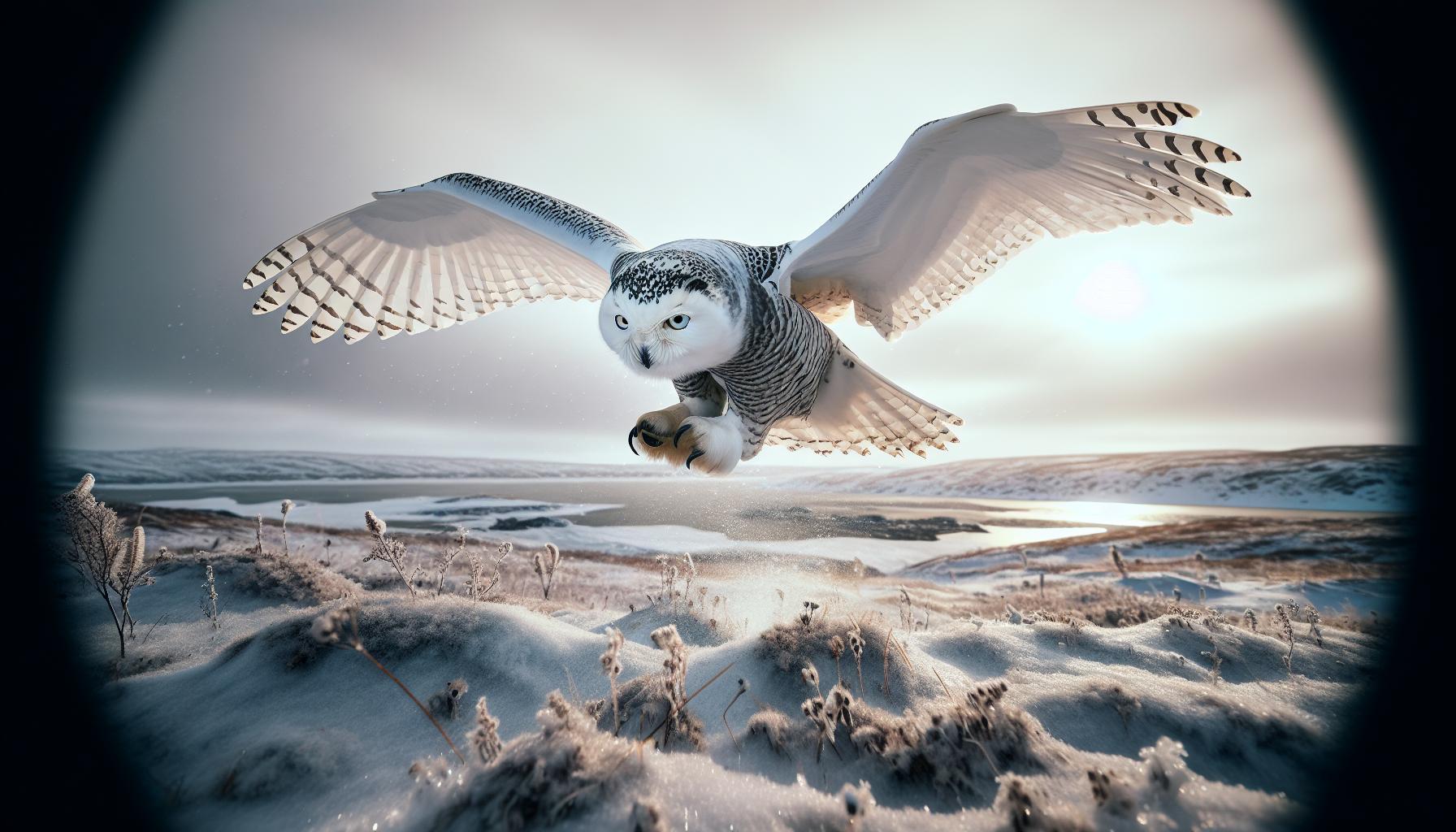
Under the shimmering cloak of the Arctic night, the snowy owl embarks on its timeless ritual of hunting—a dance choreographed by moonlight and stars. These majestic birds, with their ghostly plumage and piercing yellow eyes, have evolved for life in the stark polar wilderness, relying on natural light to detect and capture elusive prey. However, the creeping encroachment of artificial illumination—light pollution—is rewriting the narrative of their nocturnal hunt. This clandestine influencer disrupts the delicate balance of nature, tipping scales meant to favor the snowy owl and threatening its survival. Understanding the multifaceted ways light pollution impedes the hunting prowess of these ethereal predators unveils a critical urgency to preserve the integrity of dark skies and, consequently, the arctic ecosystems they illuminate.
The Nocturnal Symphony of Snowy Owl Hunting
The snowy owl’s hunting strategy is a masterclass in nocturnal adaptation. Unlike many owls that exploit deep forest shadows, snowy owls inhabit open tundra where visibility is pivotal. Their keen eyesight is attuned to the low luminance of natural celestial bodies—moonlight and starlight—permitting acute detection of movements beneath thin snow layers or in the subtle rustling of tundra vegetation. Their silent flight and strategic perch-hunting methods rely heavily on this natural dim light, allowing them to ambush lemmings, voles, and other small mammals with surgical precision. A delicate balance exists between ambient light and shadow; the owl’s prey, largely nocturnal themselves, depend on darkness to shuttle across the frozen landscapes undetected.
Defining Light Pollution: From Glow to Glare
Light pollution encompasses a spectrum of artificial illuminations that mar the natural darkness—from urban skyglow to intrusive glare and skyglare. City lights scatter upward, creating a luminous veil that obliterates the stars and moon’s pristine brilliance. Moreover, poorly designed lighting fixtures emit excessive light horizontally and upwards, piercing into natural habitats far beyond city confines. This artificial luminosity extends nocturnal brightness, blurring the line between day and night, and meddling profoundly with the circadian rhythms and behaviors of wildlife. In the Arctic and sub-Arctic regions where snowy owls roam, even modest increments in ambient light—such as those from nearby settlements, oil rigs, or transient vehicles—manifest dramatic ecological consequences.

Visual Disruption: How Artificial Light Alters Hunting Efficacy
Snowy owls depend on contrast—subtle shifts in brightness and shadow—to locate prey. Artificial light pollution floods the environment with unnatural brightness, collapsing these contrasts and diminishing the owl’s ability to discern movement effectively. Overilluminated landscapes create a visual “noise,” overwhelming the owl’s hyper-sensitive retinas. Prey animals, conversely, may become more conspicuous under artificial lighting, but this visibility is a double-edged sword. While it might initially seem advantageous for the owl, the erratic and inconsistent nature of artificial light often leads to confusion, disrupting timing and hunting strategy. Moreover, bright lights can induce prey to alter their habits, retreating prematurely or seeking refuge in less illuminated zones, leading to inefficient hunt periods and increased energy expenditure for the owls.
Behavioral Alterations Stemming from Light Pollution
Exposure to pervasive light disrupts the natural behaviors of snowy owls in profound ways. Their hunting schedules, once harmonized with astronomical cues, may become erratic under artificial conditions. Erroneous lighting can extend perceived daytime, truncating crucial feeding windows and impairing energy balance. Additionally, snowy owls exhibit territorial and mating behaviors timed tightly to seasonal light changes and darkness spans; disturbance in these cues may precipitate stress, disorientation, and lower reproductive success. Some owls have been observed avoiding artificially lit areas altogether, effectively shrinking their viable hunting grounds. The displacement forces them into suboptimal habitats, increasing vulnerability to predators and environmental stressors.
Ecological Ripple Effects: The Prey’s Perspective
Light pollution doesn’t just affect predators; it acts as an ecological disruptor on prey populations, which snow owls depend on. Nocturnal rodents, including lemmings, derive safety from darkness, using shadows to conceal their movements and forage effectively. Artificial light can suppress nocturnal activities, depress reproduction rates, and alter habitat usage among prey species. Changes in prey availability reverberate upwards, compelling snowy owls to adjust hunting tactics or natural ranges, sometimes migrating during seasons they would typically remain. This cascade effect illustrates how light pollution fractures the tightly interwoven Arctic food web and accentuates the owl’s struggle for survival amid already challenging environmental conditions.
Technological and Conservation Solutions to Mitigate Impact
To safeguard the snowy owl’s haunting nocturnal hunt, mitigating light pollution in vulnerable regions is paramount. Employing shielded lighting fixtures, utilizing motion-activated lights, and adhering to lighting ordinances that enforce curfews and spectral restrictions can substantially reduce light spill. Technological advancements in “wildlife-friendly” lighting—often amber or red hues with lower intensity—offer promising options to reconcile human activity with ecological balance. Conservation efforts can be further bolstered by dark-sky reserves and designated buffer zones encompassing key owl habitats. These protective measures create sanctuaries where the moon and stars regain dominion, restoring natural conditions foundational to the snowy owl’s ancient hunting choreography.
Future Challenges and The Path Forward
The Arctic is undergoing rapid transformation, not solely due to climate alterations but increasingly from anthropogenic illumination. Expanding infrastructure—mines, oil extraction, urban sprawl—increases the footprint of artificial light, threatening snowy owls and myriad other nocturnal species. Addressing these challenges demands a multidisciplinary approach integrating ecological research, community engagement, and policy innovation. Promoting awareness of light pollution’s insidious effects among local populations and industries heightens stewardship and inspires sustainable development. Protecting the nocturnal sanctity of the Arctic isn’t merely about preserving the snowy owl’s hunt. It symbolizes a broader commitment to balancing human progress with the preservation of wild, untouched nightscapes that support all life beneath the cosmic canopy.
In the boundless theater of the Arctic night, snowy owls glide silently—their hunt intimately intertwined with darkness itself. As light pollution threatens to rewrite this nocturnal script, the urgency to shadow our lights, reclaim the night, and safeguard these enigmatic guardians of the tundra has never been greater. The survival of snowy owls pulses in the balance, hinged on humanity’s capacity to revere and restore the simplicity and sanctity of natural night illumination.