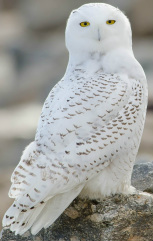
In the unforgiving expanses of the Arctic, where relentless storms and blizzards reign with merciless fury, the Snowy Owl emerges as a beacon of resilience and adaptability. These magnificent creatures, draped in their ethereal white plumage, seem almost otherworldly as they navigate the tempestuous elements of their frozen domain. Observers often find themselves mesmerized not just by their striking appearance but by their uncanny ability to endure and even thrive amid some of the planet’s harshest weather conditions. This narrative unravels the intricate tapestry of how Snowy Owls confront Arctic storms and blizzards, revealing layers of survival strategies hidden beneath their serene exteriors.
Mastery Over the Elemental Fury: Weathering the Arctic Tempest
Arctic storms are not mere inconveniences; they are vast cascades of acidic winds, stinging snow, and obliterating cold that transform the landscape into a shimmering, hostile wilderness. Yet, the Snowy Owl endures. This endurance is no accident. Equipped with a suite of physiological and behavioral adaptations, these owls exhibit a synthesis of endurance and elegance at every tempest’s onset. Their dense, layered feathers are a marvel of natural engineering—feathers tightly interlock, creating an insulating barrier that traps heat effectively. Beneath their snowy plumage, a thick layer of down feathers lies close to the skin, serving as an additional thermal shield against bone-chilling temperatures.
Beyond insulation, their feathered legs and toes form a snowproof fortress, protecting vital extremities from freezing. In uproarious wind and drifting snow, these owls possess the uncanny ability to maintain balance and composure, an ode to their robust musculoskeletal system and exceptional talon grip. The snowy cloak not only camouflages them, reducing predation risk during storms, but also provides protection against abrasion from icy particles buffeting their bodies.
Behavioral Ingenuity: Seeking Shelter and Conserving Energy
Nature has endowed Snowy Owls with striking intelligence and foresight, compelling them to display resourceful behaviors when clouds thicken and Arctic tempests surge. Unlike many birds that flee before inclement weather, Snowy Owls often remain steadfast, relying heavily on strategy. During blizzards, they seek microhabitats that buffer the harshest conditions—natural windbreaks such as snowdrifts, rocky outcrops, or dense shrubbery where the swirling chaos of ice-laden gusts is somewhat tempered.
Additionally, these owls reduce their physical activity, entering a low-energy state to conserve precious metabolic reserves. Rather than soaring or perching exposed, they prefer crouching close to the ground, flattening their bodies to adopt an aerodynamic form that minimizes wind resistance. This behavior not only prevents excessive heat loss but also reduces the risk of injury from fierce winds. Their acute sensory perception aids in detecting the subtle changes in weather patterns, prompting timely retreats to safer shelters—a quiet testament to their instinctual wisdom.
Facultative Torpor: The Metabolic Secret to Surviving Harsh Weather
Underneath the visible adaptations lies a deeper physiological phenomenon: facultative torpor. When the Arctic storms strangle the land in bitter cold and food becomes scarce, Snowy Owls can momentarily dial down their metabolic rate. This ability to enter a subdued state of reduced physiological activity allows them to conserve energy when sustaining normal metabolic rates would be perilous or impossible. Unlike hibernation, which is prolonged, torpor is short-term and reversible, granting these owls flexibility in energy management.
By lowering their body temperature and heart rate slightly, Snowy Owls limit caloric expenditure, effectively “pausing” certain bodily functions just enough to ride out the storm’s worst phases without succumbing to exhaustion or starvation. This fascinating adaptation underscores their supreme evolutionary finesse—balancing survival with the necessity of remaining alert to sudden environmental changes.
Hunting Amid the Blizzard: Persistence and Adaptation Against All Odds
Perhaps most astonishing is the Snowy Owl’s capacity to hunt in conditions that would confound many predators. The Arctic is a land of extremes, and blizzards can obscure vision and muffle sound, yet these owls persist in their pursuit of prey. Their acute hearing, capable of detecting the faintest rustle beneath layers of snow, is augmented by facial discs designed to funnel sound waves precisely to their ears. Even amid raging winds, this auditory acuity allows them to pinpoint rodents such as lemmings skittering beneath the snow.
Their flight style adapts dynamically—silent and deliberate, keeping close to the ground or executing low, slow-winged sweeps to reduce wind resistance and avoid snow drifts. When the moment is right, talons strike with precision honed by countless hunting trials in even the bleakest of weather. The ability to forage and secure nourishment during storms is essential, not only for individual survival but for sustaining energy reserves vital through the extended winter months.
Symbolism and the Arctic Enigma: Why We Are Drawn to Their Stormbound Majesty
The enduring image of a Snowy Owl standing resolute against the backdrop of an Arctic tempest evokes more than biological fascination. It taps into a primal reverence for nature’s indomitable spirit. Observers are captivated by an entity that simultaneously embodies fragility and power, vulnerability and fortitude. Their ghostly white plumage against swirling snow conjures visions of ethereal guardianship, a living emblem of survival against the ceaseless struggle between life and the elements.
Intriguingly, our attraction to these storm-hardened raptors mirrors a deeper human admiration for perseverance, for quiet resilience in the face of overwhelming adversity. The Arctic storm is a metaphor and the Snowy Owl its living testament—a creature whose very existence seems to whisper secrets about endurance, adaptation, and the sublime poetry written by nature’s hand in ice and wind.
Conclusion: The Snowy Owl’s Enduring Legacy in the Arctic Wilds
The Snowy Owl embodies an exquisite blend of nature’s ingenuity and raw survival instinct. Their intricate adaptations—from plumage insulation and behavioral stealth to physiological marvels like facultative torpor—combine to render them masters of the Arctic storms and blizzards. Through each freezing gale and blinding snow, they reveal the relentless pulse of life pushing forward amidst adversity. This resilience inspires not just scientific wonder but a profound, almost spiritual appreciation for the delicate dance between predator, prey, and the elemental forces that shape their frozen, enigmatic world.