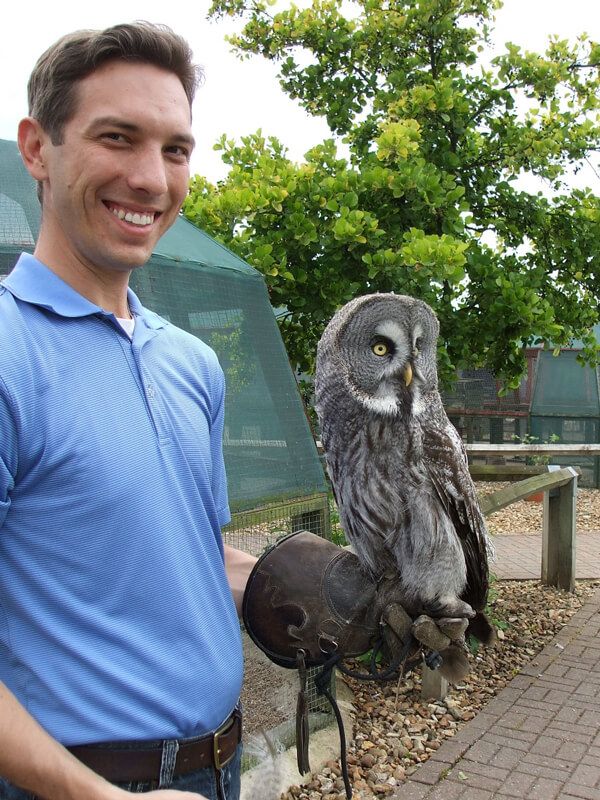
The mysterious and almost supernatural ability of owls to fly silently as they hunt has captivated human imagination for centuries. Their enigmatic silence is not merely a quirk of nature but a marvel of evolutionary engineering—a confluence of anatomical ingenuity, aerodynamic subtleties, and behavioral precision. The symphony of soundless flight allows owls to dominate nocturnal skies, securing prey with a stealth that leaves the forest floor unsuspecting. Understanding the science behind this silent hunting reveals an intricate tapestry woven from feather morphology, wing mechanics, and sensory adaptations that coalesce into one of nature’s most effective aerial predators.
Feather Architecture: The Foundation of Silent Flight
At the heart of an owl’s silent glide lies the extraordinary structure of its feathers. Unlike the rigid feathers of many birds, owl plumage boasts a soft, velvety texture that muffles sound vibrations. The upper surfaces are covered with fine, fringed edges known as fimbriae. These serrated fringes break the airflow over the wings into micro-turbulent currents, diffusing sound waves that would otherwise betray the bird’s approach. Meanwhile, the downy barbs underneath the wings create a plush, sound-absorbing layer akin to acoustic foam.
This dual-layered feather construction demonstrates an evolutionary adaptation at a microstructural level that is rare in the avian world. The friction-reducing properties diminish aerodynamic noise, permitting the owlet to descend upon prey without warning. The intricate interlocking of barbules also ensures feather alignment remains uninterrupted during flight, preserving both stealth and aerodynamic efficiency.
Wing Morphology and Aerodynamics
Owls possess broad, rounded wings that facilitate low-speed flight and remarkable maneuverability. These expansive wings increase lift and allow owls to glide with minimal wingbeat frequency, reducing sound emission. The wingspan-to-body ratio enhances flight stability, enabling slow, controlled movements essential for stalking prey silently.
Integral to this is the owl’s ability to exploit laminar airflow—a smooth flow of air over the wing surface—minimizing turbulence and consequent noise. The thick, rounded primary feathers at the wing tips act almost like a built-in noise dampener, disrupting the flow of air and preventing harsh eddies from forming. This airflow manipulation prevents the telltale sounds that birds in faster, more forceful flight produce.
Muscular Control and Flight Mechanics
The orchestration of silent flight transcends static feather and wing adaptations; it is equally a matter of dynamic muscular control. Owls exhibit an exquisite balance between power and finesse in their wing strokes. By modulating wingbeat amplitude and frequency, these birds maintain almost imperceptible movements. Their flight muscles are specialized to sustain this delicate balance, relying on slow-twitch fibers that support endurance and precision over explosive bursts of speed.
The precise timing of wingbeats allows owls to harness gliding phases frequently, during which their wing muscles minimize contractions, further decreasing sound production. Their skeletal adaptations also enable flexible wrist joints that fine-tune wing shape mid-flight—an essential feature for altering lift and drag silently.
Behavioral Strategies in Silent Hunting
Beyond anatomical marvels, silent flight is complemented by behavioral adaptations that maximize hunting success. Owls often exploit environmental conditions such as wind direction and ambient noise, choosing moments when their approach is least likely to be detected. Their predilection for launching attacks from elevated perches reduces the need for noisy, energy-consuming takeoffs.
Strategic hunting techniques include hovering briefly above prey or employing sudden, short glides that evade auditory detection. Owls also rely on acute auditory and visual senses sharpened by their silent approach, allowing them to pinpoint prey with remarkable accuracy even in total darkness.
The Role of Sensory Adaptations in Complementing Flight Silence
The zenith of silent flight’s evolutionary sophistication manifests in the owl’s sensory apparatus, which operates in symphony with its flight mechanics. The facial disc acts as a parabolic collector, funneling sound to asymmetrically placed ears that grant exceptional directional hearing. This auditory precision reduces the need for fast, visually oriented chases that generate noise. Instead, owls can detect and localize prey subtly and execute slow, stealthy approaches.
Moreover, the retina of an owl’s eye contains a high density of rod cells, enhancing low-light vision. This allows silent hunters to exploit the cover of darkness, blending their ghostly flight with the nocturnal landscape, impervious to detection by their quarry.
Ecological Implications of Silent Flight
The evolutionary consequences of silent flight extend beyond predator-prey interactions. Owls with this ability influence the population dynamics of nocturnal rodents and insects, stabilizing certain ecosystems through natural pest control. Their stealthy hunting emphasizes the intricate balance of nocturnal food webs and highlights the importance of behavioral and morphological adaptations in ecological roles.
Silent flight also allows owls to occupy niche habitats that other predators cannot access effectively, demonstrating the role of specialized traits in biodiversity. This capability shapes habitat selection and territorial behaviors, influencing broader patterns of nocturnal wildlife communities.
Technological Inspirations and Future Research
The extraordinary science of owl flight has not gone unnoticed in human innovation. Biomimicry inspired by the feather microstructure and wing design informs advances in aerospace engineering, particularly in the development of quieter drones and wind turbines. These technologies aim to replicate owl-like noise suppression mechanisms to reduce environmental sound pollution.
Continued research into the biomechanics and neurobiology of owls promises to reveal further nuances of silent flight. High-speed videography, wind tunnel studies, and material analysis of feathers provide insights that deepen our appreciation of nature’s engineering marvel. These studies not only illuminate owl biology but also pave the way for breakthroughs in noise control and flight efficiency across species and machines.
Silent owl flight is a majestic example of how evolution sculpts complexity with elegance and purpose. Every feather, muscle, and behavioral nuance converges to create the ghostly hunter of the night, a paragon of stealth and precision that continues to inspire wonder and scientific exploration.