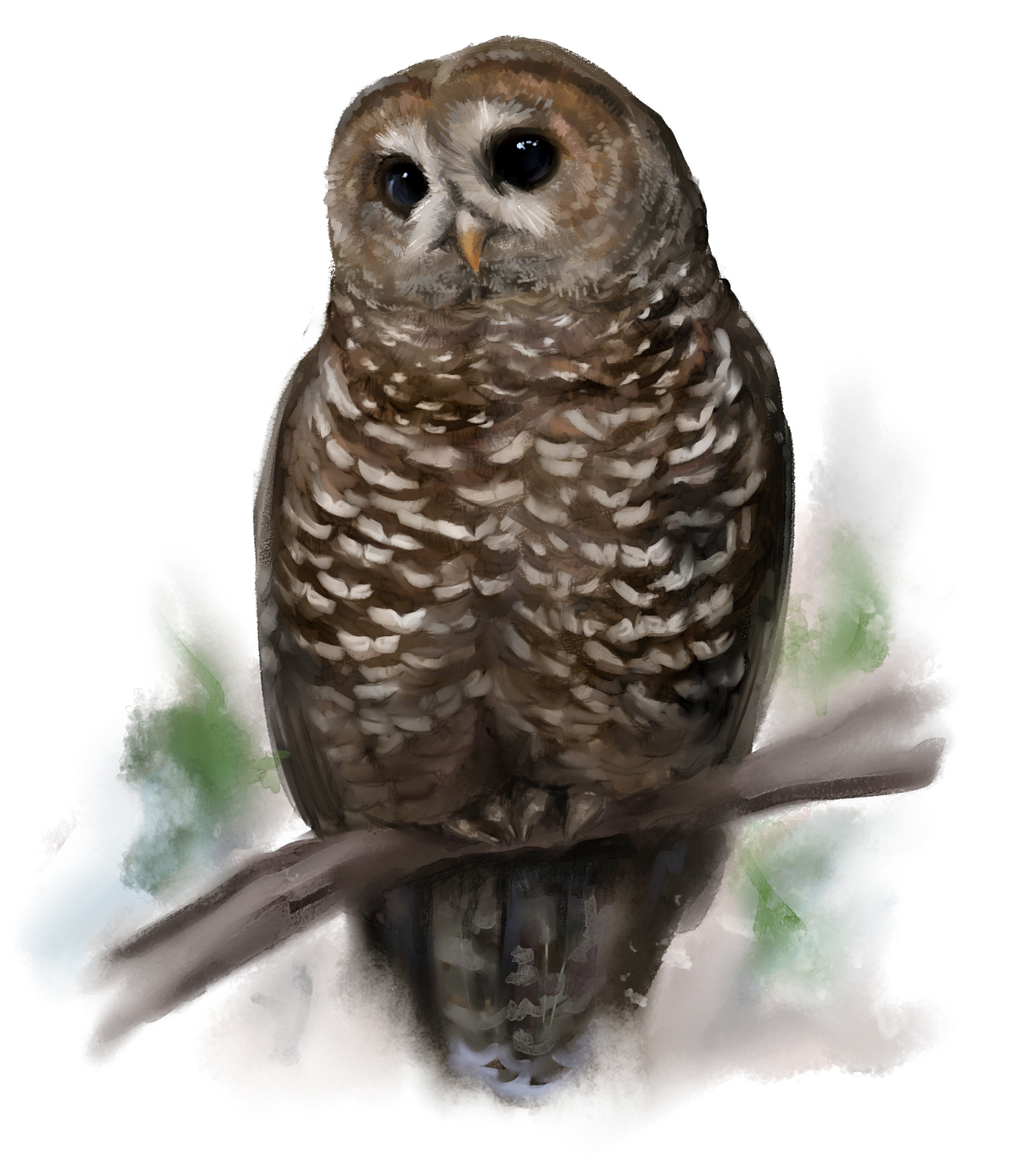
The California spotted owl (Strix occidentalis occidentalis) is a silent sentinel of the ancient forests, a ghostly presence in the canopy where sunlight filters through towering conifers. Its mottled plumage, a tapestry of browns and whites, blends seamlessly with the dappled shadows of its habitat. Yet, this elusive bird is not merely a creature of myth or folklore—it is a living barometer of ecological health, a harbinger of the delicate balance between human ambition and nature’s resilience. The battle to protect this species is not just about saving a single bird; it is a struggle to preserve the integrity of entire ecosystems, to honor the silent covenants between species that have thrived for millennia. In the rugged expanse of California’s forests, where the air hums with the whispers of wind through pine needles, the fate of the spotted owl hangs in the balance—a testament to the enduring, often contentious, dance between conservation and development.
The Vanishing Canopy: Why the California Spotted Owl is in Peril
The California spotted owl’s decline is a slow unraveling, a tragedy written in the language of fragmented habitats and shifting climates. Once a denizen of the old-growth forests that stretched from the Sierra Nevada to the coastal ranges, this owl now finds itself hemmed in by the relentless march of logging, urban sprawl, and the creeping specter of climate change. The very trees that once provided it with shelter and sustenance—mature conifers like ponderosa pine, white fir, and Douglas fir—are being felled at an alarming rate, leaving behind a patchwork of clear-cuts and second-growth forests that lack the structural complexity the owl requires. Fire suppression, ironically, has also played a villainous role; without the natural cycle of wildfires to thin out underbrush and create mosaic landscapes, the forests have become overgrown, dense, and prone to catastrophic blazes that leave little refuge for the owl. The result is a species teetering on the edge of local extirpation, its once-vibrant populations now confined to isolated pockets of wilderness.
The Human Footprint: How Development and Policy Shape the Owl’s Fate
To understand the plight of the California spotted owl is to confront the paradox of human progress—a narrative where progress and preservation often collide in a clash of competing values. The owl’s decline is inextricably linked to the economic engines that have reshaped California’s landscape: timber harvesting, real estate expansion, and the relentless demand for resources. Logging, in particular, has been a double-edged sword. While selective cutting can mimic natural disturbances and maintain habitat diversity, clear-cutting and high-grading (the removal of the most valuable trees) have left vast stretches of forest biologically impoverished. Meanwhile, urban encroachment has gobbled up the wild edges where owls once foraged, replacing the quiet rustle of leaves with the roar of machinery and the glow of streetlights. Policies, too, have been a double-edged blade. The Endangered Species Act, while a powerful tool for conservation, has been mired in legal battles and political tug-of-wars, with stakeholders from industry, environmental groups, and government agencies locked in a perpetual stalemate over how to balance protection with economic growth.

The Silent Symphony: The Ecological Role of the Spotted Owl
Beneath the owl’s nocturnal gaze lies a hidden web of ecological relationships, a silent symphony where every species plays a part. The spotted owl is not merely a predator; it is a keystone species, its presence a signal of a healthy, functioning forest. By preying on small mammals like woodrats, squirrels, and voles, it helps regulate their populations, preventing overgrazing and maintaining the delicate balance of the forest floor. Its nesting habits, often in the hollows of ancient trees or the dense foliage of mature stands, create opportunities for other cavity-nesting species, from woodpeckers to flying squirrels. Even its pellets—regurgitated masses of indigestible fur and bone—enrich the soil, fostering the growth of fungi and plants that sustain the entire ecosystem. To lose the spotted owl is to unravel this intricate tapestry, to silence the chorus of life that has evolved over centuries in these ancient forests.
Lessons from the Frontlines: Conservation Strategies That Work
The fight to save the California spotted owl has been a crucible of innovation, where conservationists have been forced to think beyond traditional boundaries. One of the most promising strategies has been the restoration of fire-adapted landscapes. By reintroducing prescribed burns and allowing natural wildfires to play their ecological role, managers can reduce fuel loads, promote forest heterogeneity, and create the mosaic of open and dense patches that the owl requires. Another critical approach is the designation of protected areas—core habitats where logging and development are restricted, allowing the owl to thrive undisturbed. Collaborative conservation efforts, too, have proven invaluable. Partnerships between government agencies, Indigenous communities, and private landowners have led to creative solutions, such as sustainable forestry practices that mimic natural disturbances while still providing economic benefits. Even technological advancements, like remote sensing and camera traps, have revolutionized how researchers monitor owl populations, enabling data-driven decisions that were once impossible.
The Climate Wildcard: How a Changing Planet Affects the Owl’s Future
No discussion of the California spotted owl’s future can ignore the looming specter of climate change—a wildcard that threatens to upend even the most carefully crafted conservation plans. Rising temperatures are altering the distribution of prey species, forcing owls to adapt to new hunting grounds or face starvation. Droughts, more frequent and severe, are weakening the trees that provide critical nesting sites, while the increasing intensity of wildfires is turning once-suitable habitats into charred wastelands. Even the owl’s own reproductive success is at risk; warmer winters can disrupt the timing of breeding cycles, leaving chicks vulnerable to late-season frosts. The owl’s plight is a microcosm of a larger crisis, a reminder that conservation cannot exist in a vacuum. To protect the spotted owl is to address the root causes of climate change itself—reducing carbon emissions, restoring degraded landscapes, and fostering resilience in the face of an uncertain future.
Community Engagement: Why Local Voices Matter in Conservation
The battle to save the California spotted owl is not just a scientific or political endeavor—it is a deeply human one. The forests where this owl lives are not empty spaces; they are home to communities that have relied on these lands for generations. Indigenous tribes, such as the Yurok and the Karuk, have long understood the interconnectedness of all life, and their traditional ecological knowledge offers invaluable insights into sustainable forest management. Meanwhile, rural communities dependent on timber and tourism often view conservation efforts with skepticism, fearing that restrictions on land use will stifle their livelihoods. The key to success lies in bridging these divides, in creating spaces where diverse voices can be heard and where shared goals can emerge. Educational programs, eco-tourism initiatives, and collaborative stewardship projects can help foster a sense of ownership and pride in conservation, transforming the owl from a symbol of conflict into a beacon of hope for both people and wildlife.
The Road Ahead: Hope, Challenges, and the Path Forward
The future of the California spotted owl is a story still being written, a narrative that will be shaped by the choices we make today. There is reason for cautious optimism. Conservation successes, from the recovery of other owl species to the restoration of fire-adapted landscapes, prove that with dedication and innovation, even the most beleaguered species can rebound. Yet the challenges are daunting. Climate change looms large, and the political will to prioritize long-term ecological health over short-term economic gains remains fragile. The path forward will require a multifaceted approach—one that integrates science, policy, community engagement, and adaptive management. It will demand that we rethink our relationship with the natural world, that we recognize that the fate of the spotted owl is not separate from our own. In the quiet rustle of the forest, in the haunting call of the owl echoing through the trees, lies a challenge and an opportunity: to prove that humanity is capable of more than destruction, that we can be stewards of the land rather than its conquerors. The battle is not yet lost. The forest still stands. And the owl, with its golden eyes and silent wings, waits.