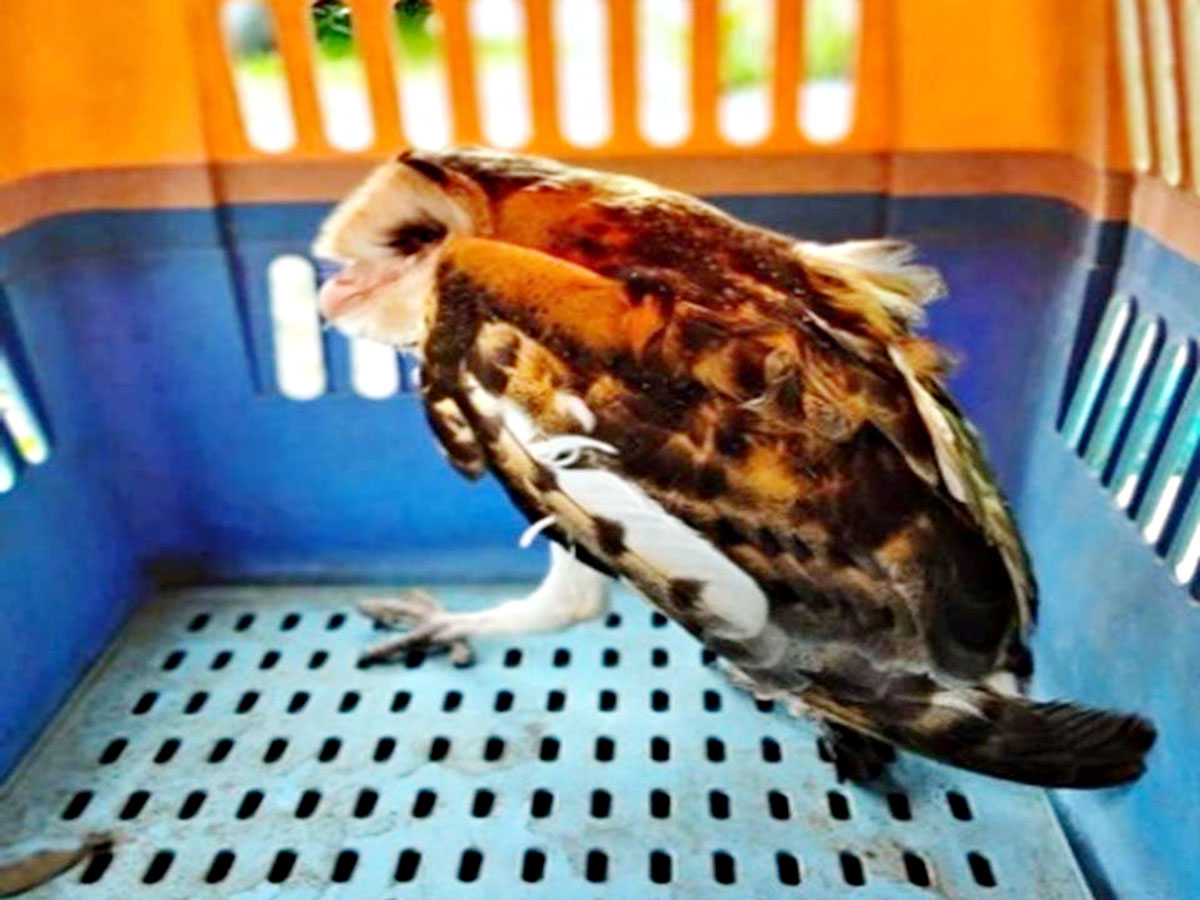
There’s a moment, suspended in time, when the world narrows to a single, fragile creature—a wounded owl, its golden eyes dimmed by pain, its wings trembling against the weight of an unseen burden. The air grows heavy with urgency. Every second counts. But how do you move such a creature without causing further harm? How do you become its lifeline in a world that moves too fast? The answer lies not in brute force, but in quiet understanding, in the delicate art of restraint and care. This is how you transport an injured owl safely.
The First Step: Assessing the Situation Without Touching
Before your hands ever meet its feathers, pause. Observe from a distance. Is the owl perched precariously on a branch, or sprawled on the ground, wings splayed like broken sails? Does it react to your presence, or does it lie still, as if the world has already given up on it? Injured owls often mask their pain with stoic stillness, a survival instinct honed over millennia. A flicker of movement, a sudden flinch—these are the whispers of its distress. Do not rush. Let the owl dictate the pace. If it’s alert but unable to fly, it may lash out in fear. If it’s lethargic, it may be in shock. Your goal isn’t just to move it—it’s to move it without escalating its trauma.
Gathering the Right Tools: The Arsenal of Care
You’ll need more than just your hands. A towel, preferably thick and dark, serves as both shield and restraint. A sturdy cardboard box, lined with soft fabric, becomes a sanctuary. Gloves—thick, leather, or even gardening gloves—are your armor against talons that could slice skin like a surgeon’s blade. A small, shallow dish of water, placed in the box, offers hydration without risk of drowning. And if the owl is large, a blanket or a net may be necessary to corral it gently. These tools aren’t just accessories; they’re the difference between a rescue and a tragedy.
The Approach: Moving Like a Shadow
Creatures of the night are attuned to the slightest disturbance. Your approach must be a whisper, not a storm. Move slowly, deliberately. Avoid direct eye contact—the owl may interpret it as a challenge. Instead, glance at its feet, its wings, the way its body tenses. If it’s on the ground, approach from behind, using the towel to shield yourself as you drape it over the owl’s head. This isn’t just about protection; it’s about inducing a state of calm. The darkness beneath the towel mimics the safety of a nest, a place where fear can dissolve. If the owl is perched, use the towel to gently guide it downward, never pulling—only coaxing.
Containment: The Art of Restraint Without Force
Once the owl is covered, lift it with both hands, cradling its body against your chest. Its talons may dig in, but resist the urge to pull away—this could tear its skin. Instead, let it cling. Your grip should be firm but not crushing, like holding a live ember. If the owl is too large to hold comfortably, use the towel to wrap it partially, leaving its head exposed. Never squeeze its chest—owls have fragile respiratory systems. And never, ever lift it by its wings. A broken wing is a death sentence for a creature that relies on flight to survive.
The Box: Crafting a Temporary Haven
The transport box isn’t just a container—it’s a transition space. Line it with a soft towel or fleece, but avoid loose threads that could tangle its talons. Place the owl gently inside, ensuring its head is elevated slightly to aid breathing. If the owl is small, a single towel draped over it can provide both warmth and darkness. For larger owls, a partitioned box may be necessary to prevent thrashing. Close the lid, but leave a small gap for airflow. And here’s a crucial detail: keep the box level. Sudden drops or tilts can cause internal injuries, turning a rescue into a disaster.
The Journey: Minimizing Stress Along the Way
Every bump in the road, every sharp turn, is a jolt to the owl’s already fragile state. Drive as if you’re carrying a sleeping child—smooth, steady, predictable. Avoid loud music, sudden stops, or the blare of a horn. If possible, park in the shade to prevent overheating. And never, ever leave the owl in a hot car, even for a minute. Owls overheat quickly, and their feathers insulate them like a furnace. If the trip is long, check on the owl periodically. Is it breathing steadily? Are its eyes open? A silent owl may be a sign of shock, and that requires immediate intervention.
Arrival: The Transition to Professional Care
When you reach your destination—a wildlife rehabilitator, a vet, or a rescue center—the real work begins. Open the box slowly, allowing the owl to see its new surroundings before you attempt to move it. Speak softly. Move deliberately. Let the professionals take over, but stay nearby. Your presence, even now, can be a comfort. And as you watch them assess the owl, remember this: you’ve just performed a miracle. You’ve taken a creature on the brink and given it a chance. That’s not just transport—it’s transformation.
The Ripple Effect: Why This Matters More Than You Think
An injured owl isn’t just a bird—it’s a keystone species, a silent guardian of the ecosystem. When one falls, the balance trembles. But when it’s saved, the ripple begins. Its chicks, if it has any, survive. The rodents it preys on stay in check. The forest breathes easier. And you? You become part of that cycle. Not just a bystander, but a lifeline. That’s the power of a single act of care. It’s not just about moving an owl—it’s about moving the world, one feather at a time.