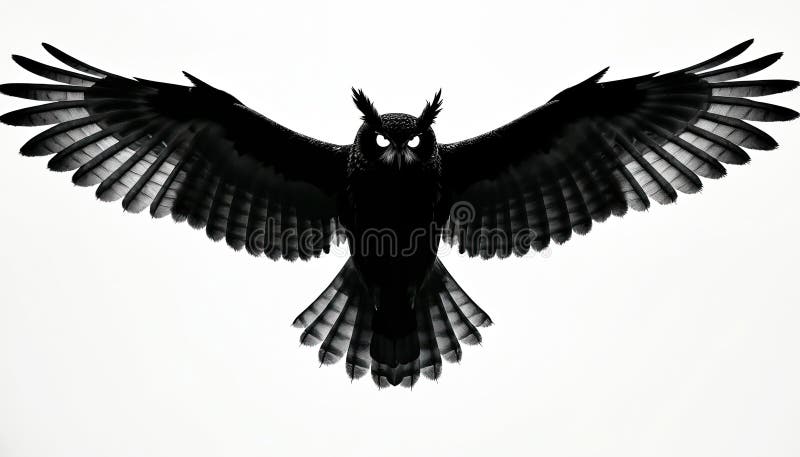
The night unfurls its velvet cloak over the Australian wilderness, and somewhere in the obsidian expanse, a silent sentinel stirs. The Powerful Owl—*Ninox strenua*—is not merely a bird; it is a paradox incarnate, a creature of contradictions that has fascinated humanity for millennia. With wings that slice through the dark like blades of obsidian, it embodies both grace and ferocity, mystery and majesty. To witness one in flight is to glimpse the raw, untamed essence of nature’s nightly dominion. But why does this apex predator captivate us so deeply? Is it the eerie symmetry of its gaze, the ghostly whisper of its wings, or the ancient stories it seems to carry in its plumage? The Powerful Owl is more than a hunter—it is a living emblem of the wild’s enduring allure.
The Silent Architect of the Night
Few creatures command the darkness with such effortless authority as the Powerful Owl. Unlike its diurnal counterparts, this nocturnal sovereign operates in a realm where sound is currency and stealth is survival. Its flight is a masterclass in aerodynamic silence, a feat achieved through specialized feather structures that muffle turbulence. Each wingbeat is a whisper, each glide a shadow slipping between the trees. This acoustic stealth is not mere convenience—it is a lethal adaptation. Prey rarely hears the hunter until it is too late, a chilling reminder of nature’s unrelenting efficiency.
The owl’s hunting grounds are meticulously chosen. It favors the dense eucalyptus forests of southeastern Australia, where the canopy provides both concealment and a vantage point. Here, the Powerful Owl perches like a sentinel, its golden eyes scanning the undergrowth with predatory precision. When the moment strikes, it descends with a velocity that defies its size, talons outstretched like daggers. Its diet—ranging from possums to gliding possums, even other birds—reflects its role as an apex predator. To observe this silent architect is to witness the night’s unspoken rules in action: adapt or perish.
The Gaze That Pierces the Veil of Darkness
Few sights are as arresting as the Powerful Owl’s gaze—a piercing, luminous intensity that seems to peer into the very soul of its observer. Those golden irises are not merely eyes; they are portals into a world where light is scarce and instinct reigns supreme. Unlike human eyes, which struggle in low light, the owl’s vision is a marvel of evolutionary engineering. Its retinas are densely packed with rod cells, granting it exceptional night vision, while a reflective layer called the *tapetum lucidum* amplifies available light, turning the faintest glimmer into a navigational beacon.
But the owl’s gaze is more than a biological wonder—it is a cultural enigma. Across countless civilizations, the owl has been both revered and reviled, a duality that the Powerful Owl embodies perfectly. In Aboriginal lore, it is often a messenger between worlds, a guardian of sacred knowledge. Yet in European folklore, it has been cast as an omen of doom. This dichotomy speaks to a deeper human fascination: the owl’s eyes seem to hold secrets, as if it sees truths we are not privy to. To meet its gaze is to confront the unknown—a thrilling, unsettling experience that lingers long after the encounter.
The Plumage of a Phantom: Camouflage and Command
The Powerful Owl’s plumage is a study in contrast and concealment. Its dark, mottled brown and white feathers blend seamlessly with the dappled shadows of the forest, rendering it nearly invisible against the bark of eucalyptus trees. This cryptic coloration is not merely aesthetic—it is a survival tool. By dissolving into the background, the owl becomes a phantom, a fleeting presence that vanishes before the human eye can fully register it. Even in flight, its silhouette is often mistaken for a trick of the light, a testament to nature’s artistry in deception.
Yet for all its camouflage, the Powerful Owl is a creature of striking presence. Its size—reaching up to 60 centimeters in height—commands attention, even if its form is not immediately discernible. The contrast between its muted plumage and the fiery intensity of its eyes creates a visual paradox: a being both hidden and revealed, elusive yet undeniably powerful. This duality mirrors the owl’s role in the ecosystem—it is both a shadow and a force, a creature that thrives in the liminal spaces between visibility and invisibility.
The Courtship of Shadows: Mating and Territory
The Powerful Owl’s social life is as enigmatic as its hunting tactics. Unlike many birds, it is largely solitary, coming together only during the breeding season. The male’s courtship display is a haunting symphony of calls—a deep, resonant *boo-boo-boo* that echoes through the night like a ghostly incantation. This vocalization is not just a mating call; it is a declaration of territory, a sonic boundary marker that warns rivals to keep their distance. The female, if receptive, responds with a softer, more melodic call, a duet that binds them in a temporary alliance.
Once paired, the owls establish a territory that can span several square kilometers. They are fiercely protective of this domain, driving off intruders with aggressive displays—hissing, snapping, and even physical confrontations. The nest itself is a simple affair, often a hollow in a large eucalyptus tree, lined with leaves and feathers. Here, the female lays a single egg, which she incubates for around 35 days. The male’s role is crucial during this period, bringing food to the nest and standing guard against predators. This division of labor speaks to the owl’s adaptability, a trait that has allowed it to thrive in Australia’s ever-changing landscapes.
The Guardian of the Wild: Ecological Significance
The Powerful Owl is not just a predator—it is an ecological linchpin. As an apex predator, it regulates the populations of its prey, preventing overgrazing and maintaining the balance of the forest ecosystem. Its presence is an indicator of a healthy environment; where the Powerful Owl thrives, the forest flourishes. Yet this role is increasingly threatened by habitat destruction, climate change, and human encroachment. The clearing of old-growth forests, in particular, has fragmented the owl’s territory, leaving it vulnerable to decline.
Conservation efforts are underway, but the Powerful Owl’s future remains precarious. Its reliance on large, undisturbed trees for nesting and hunting makes it particularly susceptible to land development. Urban sprawl, logging, and agricultural expansion have all contributed to its dwindling numbers. Yet, there is hope. Community-led initiatives, such as nest box programs and habitat restoration, are providing the owl with new opportunities to reclaim its domain. These efforts remind us that the Powerful Owl is not just a symbol of the wild—it is a living testament to the resilience of nature itself.
The Owl in the Human Imagination: A Symbol of the Untamed
Why does the Powerful Owl exert such a profound hold on the human psyche? Perhaps it is because it embodies the wild’s most primal allure—the thrill of the unknown, the fear of the dark, and the awe of nature’s unyielding power. In literature, art, and mythology, the owl has been a constant presence, a creature that transcends its biological form to become a metaphor for wisdom, mystery, and even death. The Powerful Owl, with its silent flight and piercing gaze, encapsulates all these associations and more.
It is a creature of contradictions: both gentle and ferocious, hidden and visible, feared and revered. To encounter one is to confront the duality of existence itself—the balance between light and dark, life and death, predator and prey. In a world that grows increasingly tamed by human hands, the Powerful Owl remains a wild, untamed spirit, a reminder of the mysteries that still linger in the shadows. And perhaps that is why we are so fascinated by it—not just because it is a master of the night, but because it is a mirror held up to our own primal instincts and deepest curiosities.