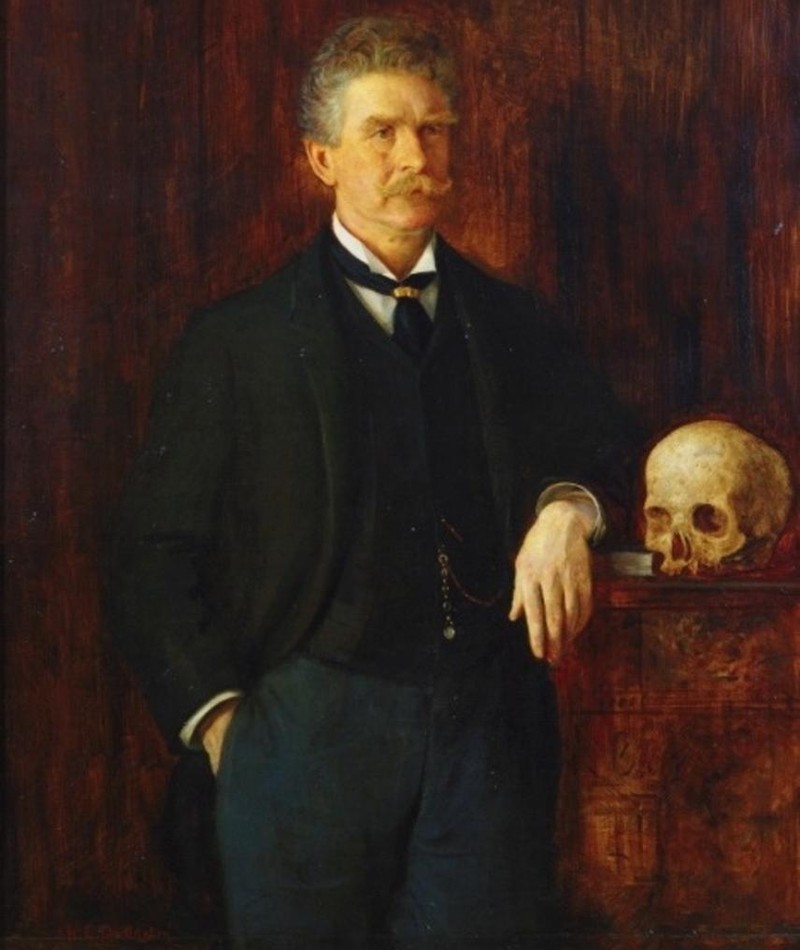
Ambrose Bierce, a master of macabre and psychological horror, wielded time and the human psyche as potent tools in his storytelling arsenal. His most celebrated short story, often cited as a pinnacle of the genre, showcases this manipulation with chilling precision. It is a descent into madness, a blurring of reality and perception, all orchestrated through Bierce’s ingenious narrative architecture. The story’s unique appeal lies in its deceptive simplicity, masking a profound exploration of the human condition under extreme duress.
The very structure of the narrative serves as the initial foray into temporal distortion. The story isn’t linear. It eschews a straightforward chronological account. Instead, Bierce interweaves three distinct temporal strands: the objective reality of Peyton Farquhar standing on Owl Creek Bridge, awaiting execution; Farquhar’s elaborate escape fantasy; and glimpses into his past, establishing his character and motivations. These strands are not presented sequentially. They are intricately braided together, creating a disorienting and increasingly hallucinatory effect.
This fragmented timeline mirrors the fragmentation of Farquhar’s mind. He is facing imminent death. His perception of time becomes warped. Moments stretch into eternities, or collapse into nothingness. The escape fantasy, the heart of the story, unfolds with a dreamlike quality, characterized by accelerated action and exaggerated sensory details. He experiences heightened awareness: the ticking of his watch becomes deafening, the currents of the river become powerful forces. All of these are testaments to his altered state of consciousness.
Bierce uses vivid imagery to enhance the sense of temporal dilation. Consider the description of Farquhar’s escape. He evades gunfire with supernatural agility. He navigates perilous rapids with improbable skill. The journey home, though seemingly arduous, transpires with an almost phantasmagorical rapidity. This juxtaposition of heightened detail and accelerated pacing underscores the subjective nature of time as experienced by a man on the precipice of oblivion. It challenges the reader to question the veracity of what they are reading, blurring the line between reality and illusion.
The psychological manipulation is equally profound. Bierce expertly exploits Farquhar’s desires and vulnerabilities to craft a deeply unsettling narrative. Farquhar is portrayed as a Southern gentleman, a man of privilege and fervent allegiance to the Confederate cause. He yearns for heroic action, for an opportunity to prove his valor. This desire is explicitly stated when he laments his inability to directly serve the Confederacy due to circumstances. This sets the stage for his vulnerability. It is exploited by the Union scout disguised as a Confederate soldier.
The Union scout’s suggestion to sabotage the Owl Creek Bridge acts as a catalyst, triggering Farquhar’s fatal delusion. Farquhar’s desire for glory, coupled with his naiveté, leads him to accept the mission without questioning the potential consequences. This reveals a crucial aspect of his character: a tendency toward romantic idealism, blinding him to the harsh realities of war. Bierce uses this character flaw to underscore the story’s broader themes about the seductive power of illusion and the devastating consequences of misplaced faith. It is a potent commentary on the romanticized view of war prevalent at the time.
The escape fantasy, then, becomes a manifestation of Farquhar’s deepest desires. It is a psychological construct designed to shield him from the unbearable reality of his impending death. In this dreamlike sequence, he becomes the hero he always aspired to be. He outwits his enemies, overcomes impossible obstacles, and returns triumphantly to his family. The idyllic depiction of his home, his wife’s loving embrace, and the promise of reunion are all carefully crafted to maximize the emotional impact of the story’s denouement.
The abrupt and shocking conclusion shatters the illusion, revealing the brutal truth of Farquhar’s fate. The final paragraph, a stark contrast to the preceding flights of fancy, pulls the reader back to the objective reality of the hanging. Farquhar’s journey home was nothing more than a fleeting hallucination, a desperate attempt by his mind to escape the inevitability of death. The image of his broken neck, suspended from the bridge, serves as a chilling reminder of the story’s central themes: the fragility of human existence, the deceptive nature of perception, and the devastating power of psychological manipulation.
Bierce’s masterstroke lies in his ability to induce a vicarious experience of disorientation and psychological distress in the reader. The narrative structure, the vivid imagery, and the manipulation of time all contribute to a growing sense of unease and uncertainty. This compels the reader to question the nature of reality. It blurs the lines between perception and delusion. The ambiguity inherent in the narrative leaves the reader grappling with the implications of Farquhar’s fate long after the story concludes. The lingering disquiet is a testament to Bierce’s skill as a writer. It is an examination of the human psyche under duress, and a profound exploration of the subjective nature of time and reality.