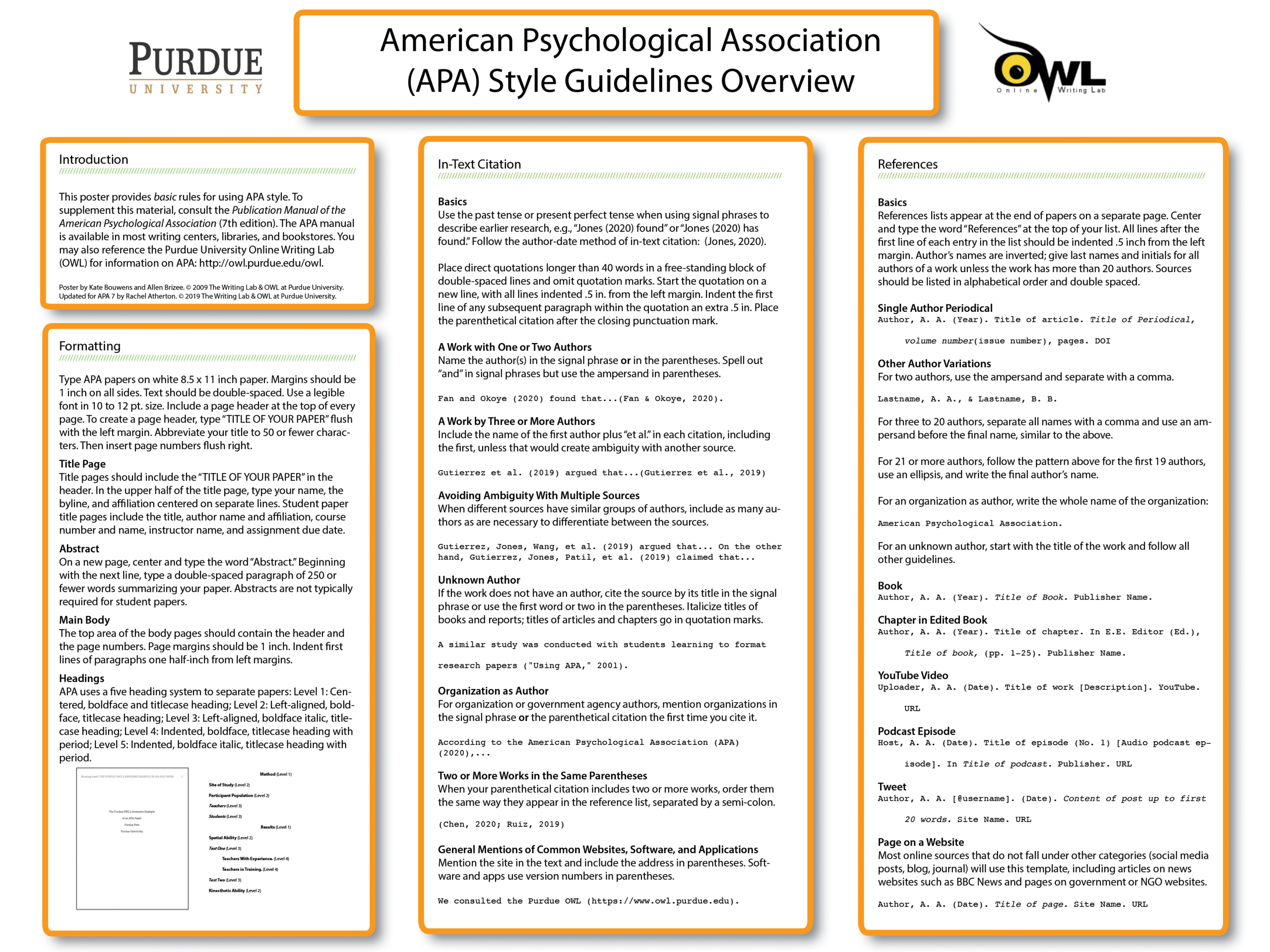
Embarking on academic writing? Chances are you’ll encounter the enigmatic world of APA citation. But amidst a sea of conflicting information, where do you turn for definitive guidance? The Purdue OWL, specifically its APA Style section, emerges as a veritable lighthouse, guiding researchers and students through the often-turbulent waters of scholarly documentation. This comprehensive resource isn’t just another website; it’s a meticulously curated compendium of information designed to demystify the nuances of APA formatting and citation, ensuring your work adheres to the highest standards of academic rigor.
Deciphering the Labyrinth: Navigating the APA Style Section
The Purdue OWL’s APA Style section presents a well-organized structure. Its modular design makes navigating the site relatively seamless. Content is categorized logically. This makes finding answers quick. Consider this your academic compass.
Formatting Fundamentals: Mastering the Building Blocks of APA
One of the most frequently accessed areas addresses the foundational elements of APA formatting. This includes the title page, abstract, headings, and the overall structure of your manuscript. Each element is meticulously explained. Visual aids, such as sample papers and templates, provide concrete examples. They can ensure correct execution.
The correct use of headings is crucial. APA utilizes a hierarchical system. This system delineates sections and subsections within your paper. The OWL provides specific guidelines. These guidelines dictate the font, size, indentation, and capitalization rules for each level of heading. Adhering to these prescriptions maintains a cohesive and professional presentation.
Citation Conundrums: Untangling the Intricacies of In-Text and Reference List Entries
Accurate and consistent citation is paramount in academic writing. The OWL dedicates substantial space to explaining the different types of sources. Source types include books, journal articles, websites, and even social media posts. Examples are plentiful.
The intricacies of in-text citations are thoroughly explored. It covers single authors, multiple authors, organizations, and works with no author. Understanding these nuances is critical to avoiding plagiarism. Direct quotes are also covered.
The reference list constitutes the backbone of your scholarly work. Here, every source cited in the body of your paper is meticulously documented. The OWL provides comprehensive templates for constructing reference entries. Templates cover various source types. It provides clear instruction. The proper formatting of journal titles, volume numbers, issue numbers, and DOI (Digital Object Identifier) numbers is also covered. These elements are all essential for accurate source identification.
Beyond the Basics: Exploring Advanced APA Concepts
The Purdue OWL transcends the basic principles. It delves into more advanced concepts that often trip up even seasoned researchers. These include:
- DOI Management: Understanding the significance of DOIs and how to correctly incorporate them into your citations.
- Secondary Sources: Citing sources that you encountered indirectly through another author.
- Legal and Government Documents: Adapting APA style to accommodate the unique requirements of legal and government publications.
- Statistical and Mathematical Notation: Presenting statistical data and mathematical equations in accordance with APA guidelines.
Accessibility and Usability: A User-Centric Approach
The OWL’s user-friendly design enhances its accessibility. The website’s clean interface and intuitive navigation allow users to quickly locate the information they need. A comprehensive search function further streamlines the process. This is especially useful when dealing with specific or obscure citation scenarios.
Keeping Pace with the Evolution of APA: Regular Updates and Revisions
APA style is not static. It undergoes periodic revisions to reflect evolving scholarly communication practices. The Purdue OWL diligently updates its content. These updates keep its users informed of the latest changes. It also makes sure users are adhering to the most current edition of the APA Publication Manual.
Complementary Resources: Expanding Your Knowledge Base
While the Purdue OWL provides a comprehensive overview of APA style, it also points to other valuable resources. These resources can deepen your understanding and refine your skills. Official APA style manuals, style guides from other universities, and online citation generators can be helpful. Remember to always verify the accuracy of any information obtained from third-party sources. Cross-reference information with the OWL or the official APA manual.
Common Pitfalls and How to Avoid Them
Even with the wealth of information available on the Purdue OWL, certain common errors continue to plague student and researchers. These include:
- Incorrect DOI Formatting: Failing to properly format DOI numbers or including inactive DOIs.
- Inconsistent Citation Style: Mixing different citation styles within the same document.
- Misunderstanding of “et al.”: Incorrectly using “et al.” when citing sources with multiple authors.
- Neglecting to Alphabetize the Reference List: Failing to arrange the reference list alphabetically by the first author’s last name.
Careful attention to detail and diligent consultation of the Purdue OWL can help mitigate these errors. Diligence ensures accuracy.
The Purdue OWL: An Indispensable Tool for Academic Success
In the realm of academic writing, precision and clarity are paramount. The Purdue OWL’s APA Style section is a comprehensive resource. It empowers students, researchers, and professionals. It empowers them to navigate the complexities of APA formatting and citation with confidence. This resource’s user-friendly design, meticulously curated content, and commitment to staying current with the latest APA revisions make it an indispensable tool for anyone striving for academic excellence. Utilize it to refine your writing, enhance your credibility, and ensure your work meets the highest standards of scholarly communication. Ultimately, the Purdue OWL serves as a crucial instrument. It enables effective scholarly communication and rigorous academic work. It’s a cornerstone for success.